Industrial filter elements depend not only on filter media quality, but also on the sealing performance between the filter media and end caps. If the adhesive bonding area is not properly sealed, unfiltered fluid may bypass the filter media, or leakage may occur during operation.
At LSX Filter, we use sealing tests to verify that the filter paper and end caps are properly bonded before the filter is approved for use or for bulk production. This test helps verify the sealing quality of the adhesive area and supports stable performance for industrial filter applications.
Why End Cap Sealing Matters
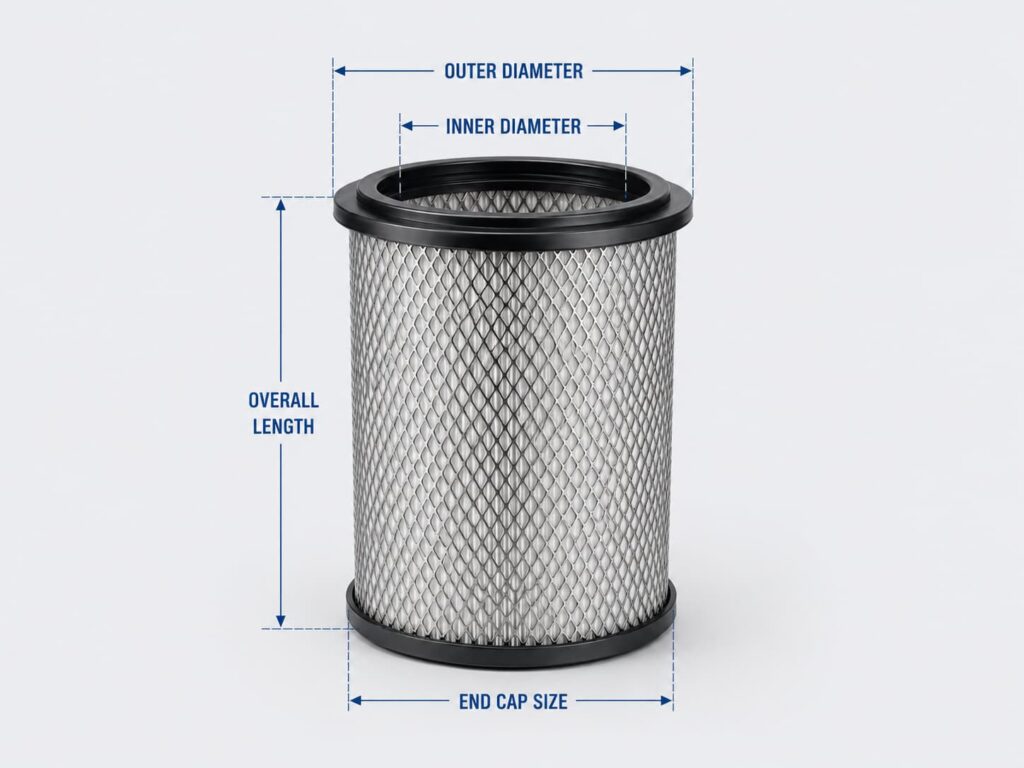
The end caps hold the filter media in position and form an important sealing area inside the filter element. For oil filters, fuel filters, hydraulic filters, and other industrial filter elements, poor bonding between the filter media and end caps may affect filtration accuracy and system protection.
If the sealing area is not properly bonded, air bubbles may appear during pressure testing. This can indicate leakage around the adhesive layer, weak bonding, or an incomplete seal between the filter paper and the end cap.
Test Purpose
The purpose of this test is to check the sealing performance between the filter paper and the two end caps. The main inspection point is whether the adhesive bonding area can remain sealed under pressure after the filter element has been fully soaked in oil.
This test is especially useful for checking filter elements where the paper media, adhesive, and end cap structure must work together to prevent leakage during operation.
Test Preparation
Before the air pressure test, the filter element is fully immersed in oil. This helps the filter media absorb oil and creates a condition closer to real working use.
After oil immersion, the filter element is installed into a testing fixture. The fixture must be properly assembled to avoid external leakage or incorrect test results. Before pressurisation, the installation position is checked to make sure the tested element is correctly mounted.
Testing Process
During the test, air pressure is applied gradually. The operator observes the connection area between the filter media and both end caps while slowly rotating the filter element.
The filter is checked from multiple angles to see whether bubbles appear around the bonding area. If bubbles are produced between the filter paper and the end cap during pressure increase, it may indicate that the adhesive sealing area is not fully sealed.
The target pressure for this test is 1.0 kPa. The pressure is increased step by step until it reaches the required range. During this process, the filter element is repeatedly rotated and inspected to confirm whether the sealing area remains stable.
How to Judge the Result
If bubbles appear around the connection between the filter media and the end caps before reaching the target pressure, the sealing performance may not meet the requirement. This usually means the bonding area needs to be reviewed.
If the pressure reaches or exceeds 1.0 kPa and no bubbles appear around the end cap bonding area, the sealing performance is considered acceptable for this inspection.
In this test, the filter element reached the target pressure range, and no bubbles appeared between the filter paper and both end caps. This indicates that the adhesive bonding strength and sealing performance passed the inspection.
What This Means for Filter Buyers
For industrial filter buyers, sealing inspection is an important part of quality control. A filter element may look correct from the outside, but the bonding between the filter media and end caps still needs to be checked carefully during production.
This type of test helps importers, distributors, equipment parts buyers, and maintenance service companies reduce the risk of leakage, bypass, or unstable filter performance before bulk purchasing.
LSX Filter Quality Inspection Support
LSX Filter supports industrial filter production, replacement filter development, and custom filter element supply. Depending on the filter type and project requirement, we can review filter structure, dimensions, sealing method, adhesive bonding, media selection, and sample performance before bulk production.
Buyers can provide OEM numbers, old samples, drawings, dimensions, photos, or application details for review. This helps confirm whether the filter structure, sealing design, and production direction are suitable for the intended application.