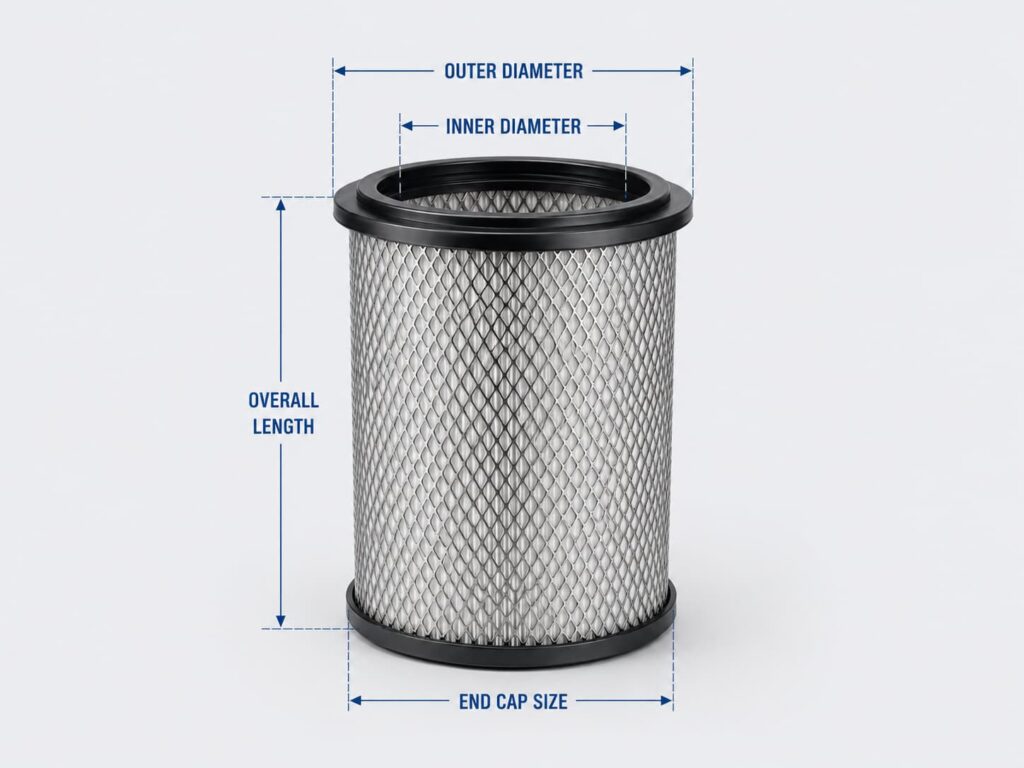
Diesel fuel filters may trap air during filter replacement, fuel line maintenance, or long equipment downtime. If this air cannot be discharged smoothly, the engine may become difficult to start, require repeated manual priming, or experience unstable fuel supply.
This is why some diesel fuel filters are designed with air vent holes, sintered vent blocks, or internal guide tubes. These small structures help release trapped air, guide diesel flow, and support smoother engine starting.
In this article, we use a PL420 fuel water separator as an example to explain how the air vent design works, why it matters, and what buyers should check when sourcing diesel fuel filters for trucks, construction machinery, generators, and other heavy-duty equipment.
What Is the Air Vent Hole in a Diesel Fuel Filter?
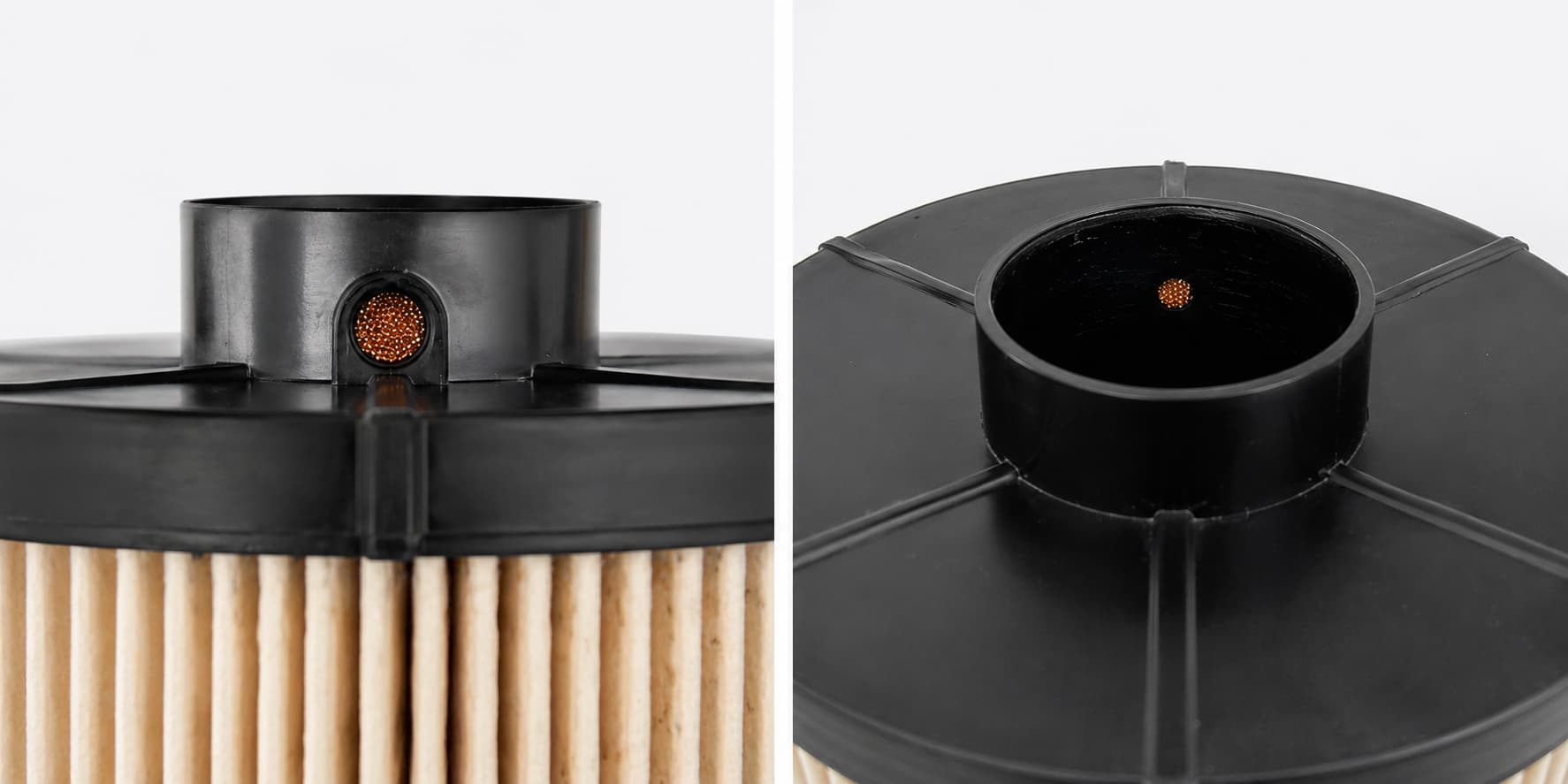
An air vent hole is a small structure used to help release trapped air from inside a diesel fuel filter.
In many fuel filters, the air vent is located near the top of the filter. This is because air is lighter than diesel fuel and naturally moves upward. If air remains in the filter, it may affect fuel filling and delivery during engine start-up.
The air vent provides a controlled path for this trapped air to leave the filter. This helps the filter fill with diesel more smoothly and supports a more stable fuel supply.
In this article, PL420 is only used as one example. The same air bleeding principle can also apply to other diesel fuel filters and fuel water separators.
Why Air Gets Trapped Inside a Fuel Filter
Air can enter the fuel filter during filter replacement, fuel line maintenance, or after the equipment has been parked for a long time.
If the fuel system is not filled or properly primed, some air may remain inside the filter housing. Since air is lighter than diesel fuel, it usually moves upward and stays near the top of the filter.
When the engine starts, this trapped air can interrupt the continuous fuel supply. As a result, the engine may be hard to start, require repeated manual pumping, idle unstably, or even shut down intermittently.
This is why air bleeding is important in diesel fuel filter design. A proper air vent structure helps reduce trapped air and supports smoother fuel delivery.
How an Air Vent Hole Helps Reduce Hard Starting
An air vent hole helps discharge trapped air from inside the fuel filter. When air can leave the filter more smoothly, diesel fuel can fill the filter faster and more completely.
This helps reduce fuel interruption during engine starting. For equipment that has been parked for a long time or has just had the fuel filter replaced, the air vent can also reduce the need for repeated manual priming.
With less air inside the filter, the fuel supply becomes more stable. This can help improve starting performance, reduce unstable idling, and lower the risk of intermittent shutdown caused by trapped air in the fuel system.
What Is a Sintered Air Vent Block in a Fuel Filter?
A sintered air vent block is a small metal part used for controlled air bleeding inside a fuel filter. In some filters, it may look like a small copper-colored or metal-colored block near the top area.
Compared with a simple open hole, a sintered vent block is a more controlled design. Its purpose is to allow trapped air to pass through while reducing the risk of unfiltered fuel bypass.
This is important because a normal small hole may let both air and fuel pass. If fuel passes through without proper filtration, it can reduce the protection effect of the filter media.
For buyers, this is a small but important product detail. Two fuel filters may look similar from the outside, but the internal air vent design can affect air bleeding, fuel flow control, and overall filtration protection.
How Fuel Flows Through a Diesel Fuel Filter
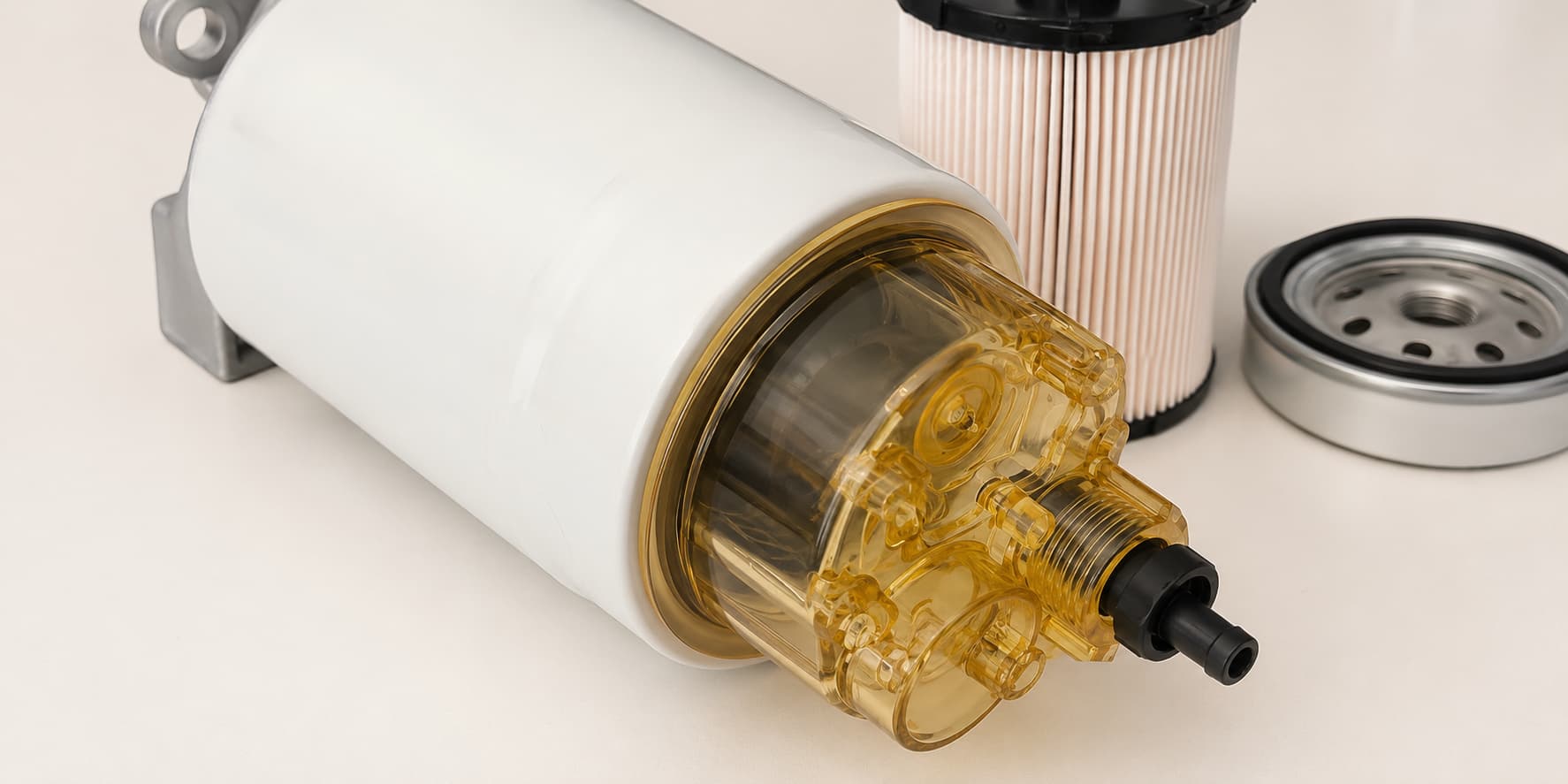
In a diesel fuel filter, fuel first enters through the inlet holes. These holes guide diesel into the filter before it passes through the filter media.
As the fuel moves through the filter paper, solid particles and part of the water are blocked outside the media. This helps reduce contaminants before the fuel reaches the next stage of the fuel system.
Because water is heavier than diesel, separated water moves downward and collects in the water collection bowl. The collected water can then be drained during maintenance.
After filtration, cleaner diesel flows through the inner outlet and is supplied to the engine. This process helps protect the fuel injection system and supports more stable engine operation.
Air Vent Hole vs Simple Open Hole: What Buyers Should Know
A simple open hole can help release air from the fuel filter. However, it may also allow both air and fuel to pass through.
This can become a problem if unfiltered fuel bypasses the filter media. In that case, particles or water may enter the next stage of the fuel system and reduce the protection effect of the filter.
A sintered air vent structure is usually a more controlled design. It helps air pass through while reducing the risk of unfiltered fuel bypass.
For buyers, this means you should not judge a fuel filter only by its appearance, size, or part number. When sourcing diesel fuel filters, it is also important to check the internal structure, air bleeding design, filter media, and application requirements.
When Should You Pay Attention to Fuel Filter Air Vent Design?
For buyers, the air vent design is worth checking when the filter is used in fuel systems where starting stability and fuel flow are important.
You should pay attention to this structure when the filter is used for:
- Diesel trucks that may stay parked for long periods
- Construction machinery working under heavy-load conditions
- Equipment that often has a hard start after filter replacement
- Fuel systems that require manual priming before starting
- Aftermarket replacement projects where the internal filter structure must match the original design
In these applications, a proper air vent design can help reduce trapped air, support smoother fuel filling, and improve fuel supply stability during starting.
Fuel Filter, Air Vent and Guide Tube Support from LSX Filter
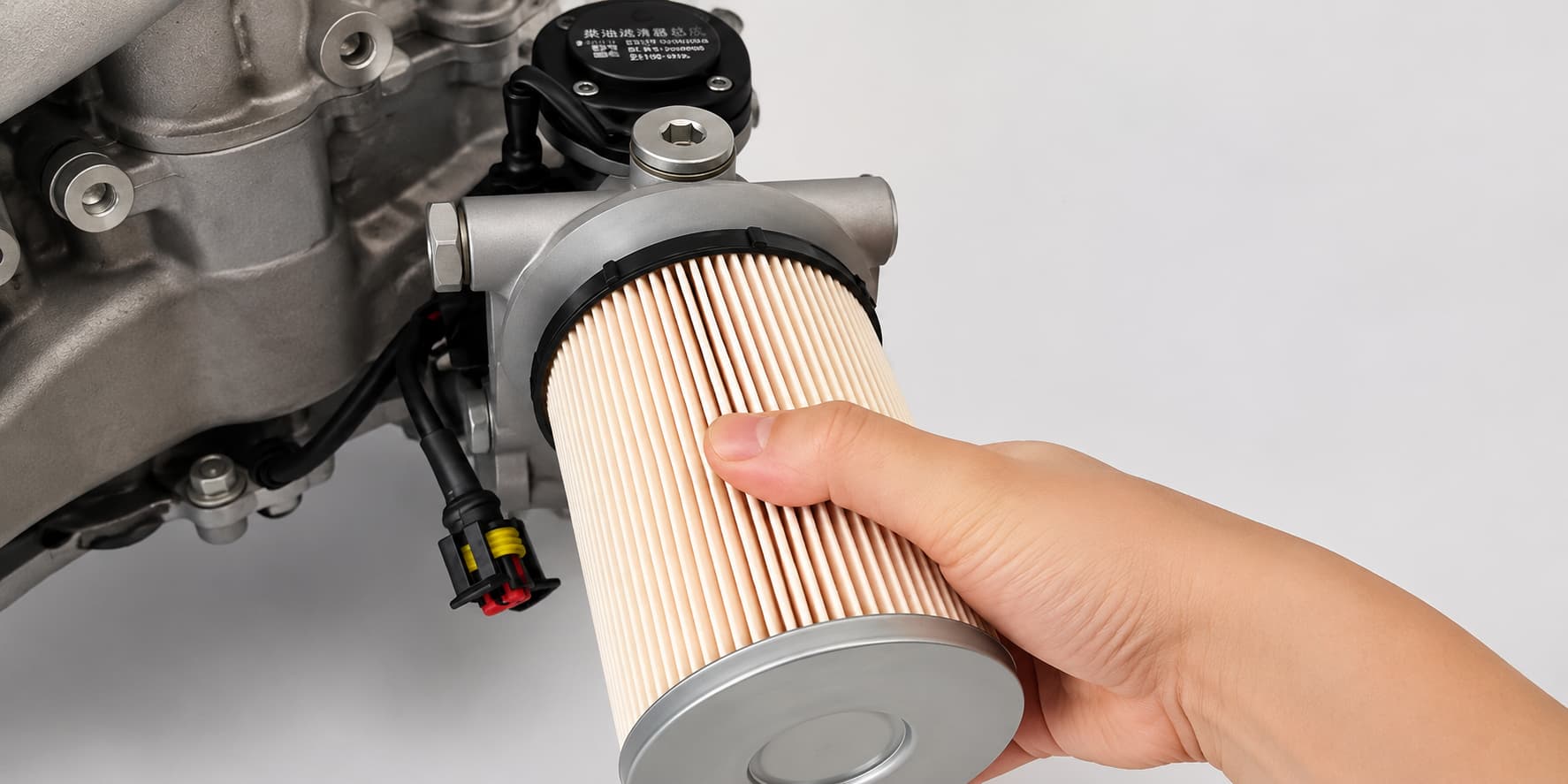
LSX Filter can supply and customise diesel fuel filters with air vent holes, sintered vent blocks, guide tubes, different filter media, and micron ratings.
If you need to match an original filter structure, you can send us the OEM number, sample, product photo, or drawing. We can help confirm the size, thread, sealing structure, internal design, and application requirements before production.
For this article, PL420 is used as one example. You can also view our PL420 fuel water separator product page for related replacement details.
FAQ About Fuel Filter Air Vent Holes
What does the air vent hole do in a diesel fuel filter?
The air vent hole helps release trapped air from inside the fuel filter. This supports smoother fuel filling, easier starting, and more stable fuel delivery.
Why does air inside the fuel filter cause hard starting?
Air can interrupt continuous fuel supply. If air remains inside the filter, the engine may need repeated priming or may start unstably after filter replacement or long parking.
Is a sintered air vent block better than a simple hole?
In many diesel filter applications, yes. A sintered air vent block helps air pass while reducing the risk of unfiltered fuel bypass.
What does the guide tube do inside a fuel filter?
The guide tube helps direct diesel flow inside the filter. It supports smoother fuel movement and more stable fuel supply during starting and operation.
Can LSX Filter produce fuel filters with air vent and guide tube designs?
Yes. LSX Filter can support fuel filters with air vent holes, sintered vent blocks, guide tubes, different filter media, micron ratings, and OEM replacement requirements.