Hydraulic filter mesh size should not be selected by mesh count alone. Buyers need to review mesh count, wire diameter, aperture size, micron rating, filter media, and application position together before confirming a replacement filter.
In hydraulic filters, metal mesh may work as a coarse filtration layer, support layer, protection layer, or main washable filtration material. Its function depends on where the filter is used, such as oil suction lines, return lines, high-pressure hydraulic systems, or reusable metal filter applications.
For replacement filter sourcing, the right mesh choice should match the original filter structure, installation size, working pressure, flow rate, oil condition, and required filtration accuracy. If the original specification is unclear, part numbers, photos, samples, or dimensions should be reviewed before bulk purchasing.
What Does Mesh Size Mean in Hydraulic Filters?
Mesh size describes the structure of a metal mesh layer used inside or outside a hydraulic filter element. It is usually related to three key factors: mesh count, wire diameter, and aperture size.
Mesh count refers to the number of mesh openings or wires within a certain length. In general, a higher mesh count means smaller openings, but this is not always enough to define filtration performance. Wire diameter also affects the actual opening size. Two meshes with the same mesh count may have different aperture sizes if the wire diameter is different.
In hydraulic filters, metal mesh is not always the main filtration layer. It may be used to block large particles, protect pleated media, support the filter structure, or provide reusable filtration in stainless steel mesh filters. Therefore, buyers should not judge a replacement filter only by mesh count. The mesh structure must be checked together with the main filter media, micron rating, pressure, flow rate, and application position.
Mesh Count, Wire Diameter, and Aperture Size
Mesh count, wire diameter, and aperture size should be reviewed together when selecting a hydraulic filter mesh. Mesh count only tells buyers how dense the metal mesh is, but it does not show the actual opening size by itself.
Wire diameter is the thickness of the metal wire used to form the mesh. When the wire is thicker, the remaining opening between wires becomes smaller. When the wire is thinner, the opening may become larger, even if the mesh count is the same.
Aperture size refers to the actual opening through which oil passes through the metal mesh. This opening affects the size of particles that may be blocked by the mesh layer. For hydraulic filters, aperture size is usually more directly related to the mesh function than mesh count alone.
For example, two filter meshes may both be described as 80 mesh, but if one uses thicker wire and the other uses thinner wire, their actual aperture size and flow resistance may be different. This is why buyers should not compare hydraulic filter mesh only by mesh count.
| Term | Meaning | Why It Matters |
|---|---|---|
| Mesh Count | The number or density of mesh openings. | Helps describe how coarse or fine the metal mesh structure is. |
| Wire Diameter | The thickness of the metal wire used in the mesh. | Affects opening size, strength, flow resistance, and support performance. |
| Aperture Size | The actual open space between mesh wires. | Helps determine what particle size the mesh layer may block. |
For this reason, a mesh specification should not be treated as a single number. In hydraulic filter sourcing, buyers should check whether the metal mesh is used for coarse filtration, media protection, structural support, or reusable filtration before confirming the replacement design.
Common Hydraulic Filter Mesh Applications
Different hydraulic filter positions may use metal mesh for different purposes. In some filters, the mesh works as a coarse filtration layer. In others, it mainly supports the pleated media or protects the internal filter structure under pressure.
The following mesh ranges are common references for hydraulic filter structures. Final selection should be confirmed according to the original filter design, main filter media, micron rating, flow rate, pressure, and working conditions.
Oil Suction Filter Mesh
Oil suction filters are usually installed inside the oil tank or before the hydraulic pump. Coarser metal mesh is often used to block larger particles such as fiber debris, welding slag, sealing fragments, and visible contaminants before oil enters the pump.
In this position, the mesh should help protect the pump while keeping smooth oil flow. It should not be too fine, because excessive flow resistance may affect oil suction performance.
- Common mesh range: 20–60 mesh
- Wire diameter: 0.2–0.5 mm
- Approx. aperture: 200–1000 μm
- Main function: Blocks large particles and protects the hydraulic pump
Return Oil Filter Coarse Mesh Layer
In return oil filters, metal mesh may be used as a coarse filtration layer, protective layer, or support layer. It helps reduce the impact of larger particles and protects the internal pleated media from deformation or damage.
Return line filtration usually needs to balance particle control and oil flow. The mesh layer should be selected together with the main filter media and required micron rating.
- Common mesh range: 40–100 mesh
- Wire diameter: 0.1–0.3 mm
- Approx. aperture: 150–500 μm
- Main function: Protects internal media and reduces large particle impact
High-Pressure Filter Support Mesh
In high-pressure hydraulic filter elements, inner and outer metal mesh is often used mainly for structural support. It helps support the pleated media under pressure and keeps the filter element stable during operation.
This mesh should not be treated as the main filtration accuracy. In many high-pressure filters, final filtration performance depends on the main media, such as glass fiber or other precision filter materials.
- Common mesh range: 80–200 mesh
- Wire diameter: 0.05–0.15 mm
- Approx. aperture: 80–250 μm
- Main function: Supports pleated media under pressure
Washable Stainless Steel Return Oil Filter Mesh
Some all-metal return oil filter elements use stainless steel mesh as the main filtration material. This type of filter may be cleaned and reused in selected hydraulic or industrial filtration applications.
Washable stainless steel mesh filters are usually chosen when reusable structure, corrosion resistance, and stable metal support are more important than very high filtration precision.
- Common mesh range: 60–150 mesh
- Wire diameter: 0.1–0.25 mm
- Approx. aperture: 100–300 μm
- Main function: Reusable metal filtration media for selected applications
Why Mesh Size Is Not the Same as Micron Rating
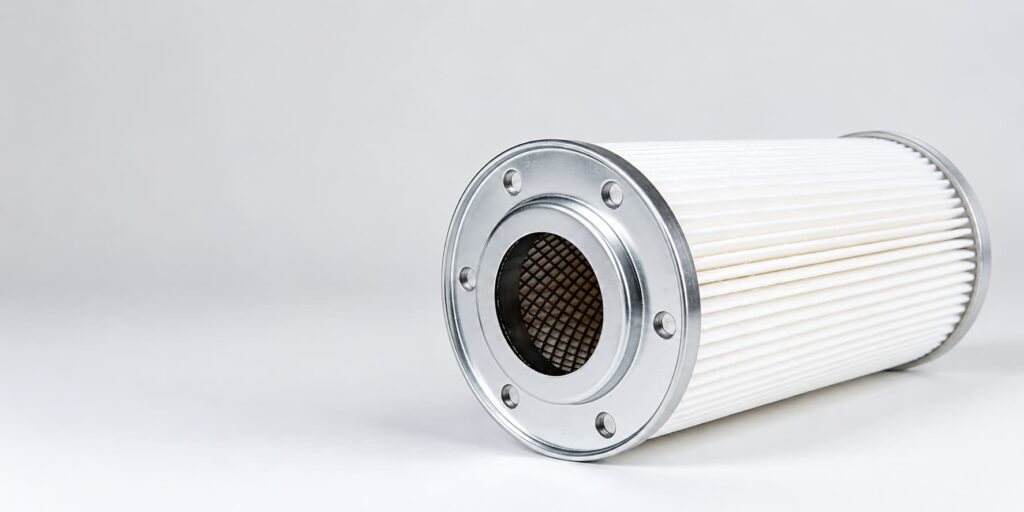
Mesh size and micron rating are related, but they are not the same. Mesh size describes the structure of a metal mesh layer, while micron rating describes the filtration accuracy of a filter element.
In many hydraulic filters, metal mesh is only one part of the filter structure. It may be used as a support layer, protective layer, or coarse filtration layer. The final filtration performance may still depend on the main filter media, such as glass fibre, synthetic fibre, cellulose, or stainless steel mesh.
This is why buyers should not judge a replacement hydraulic filter only by mesh count. A 100 mesh stainless steel layer and a 10 micron glass fibre filter element do not describe the same type of performance. One describes the metal mesh opening, while the other describes the particle filtration level of the filter media.
For replacement filter sourcing, buyers should confirm whether the mesh is the main filtration layer or only a supporting structure. They should also check the required micron rating, working pressure, flow rate, oil viscosity, and contamination level before confirming the filter design.
What Buyers Should Confirm Before Choosing Hydraulic Filter Mesh
Before choosing a hydraulic filter mesh size, buyers should confirm the full filter structure and working conditions, not only the mesh count. Mesh selection affects filtration performance, oil flow, pressure resistance, and service life, so it should be reviewed together with the original filter design.
For replacement filter sourcing, the first step is to confirm where the filter is used. Oil suction filters, return oil filters, pressure line filters, and washable stainless steel filters may require different mesh structures. A mesh layer used for pump protection is not the same as a mesh layer used for media support or reusable filtration.
Buyers should also confirm whether the metal mesh is the main filtration layer or only a support layer. In many hydraulic filters, the final filtration accuracy depends on the main filter media, while the metal mesh provides protection, strength, or coarse filtration.
Application Position
Confirm whether the filter is used in an oil suction line, return line, pressure line, oil tank, or bypass system. Different positions may require different mesh structures and flow resistance.
Mesh Function
Check whether the metal mesh works as the main filtration layer, coarse filtration layer, protective layer, or structural support layer inside the filter element.
Required Micron Rating
Mesh count should be reviewed together with the required filtration accuracy. Micron rating is still important when confirming the final replacement filter performance.
Main Filter Media
Confirm whether the filter uses stainless steel mesh, glass fiber, synthetic fiber, cellulose, or combined media. The media type affects filtration accuracy, flow resistance, and service life.
Mesh Specification
Review mesh count, wire diameter, aperture size, and material grade together. A single mesh number is not enough to judge the complete filter structure.
Working Conditions
Pressure, flow rate, oil viscosity, oil temperature, contamination level, and service environment may affect the suitable mesh and filter media selection.
Filter Dimensions
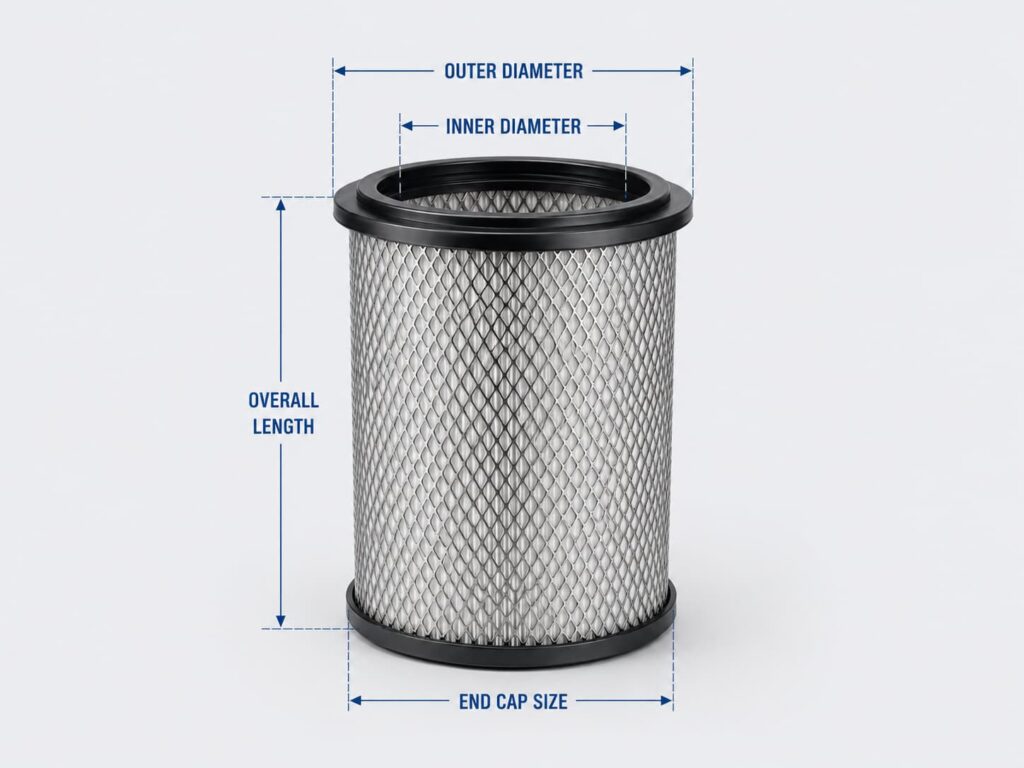
Overall length, outer diameter, inner diameter, pleat height, thread size, gasket position, and installation space should be checked before replacement confirmation.
Replacement Basis
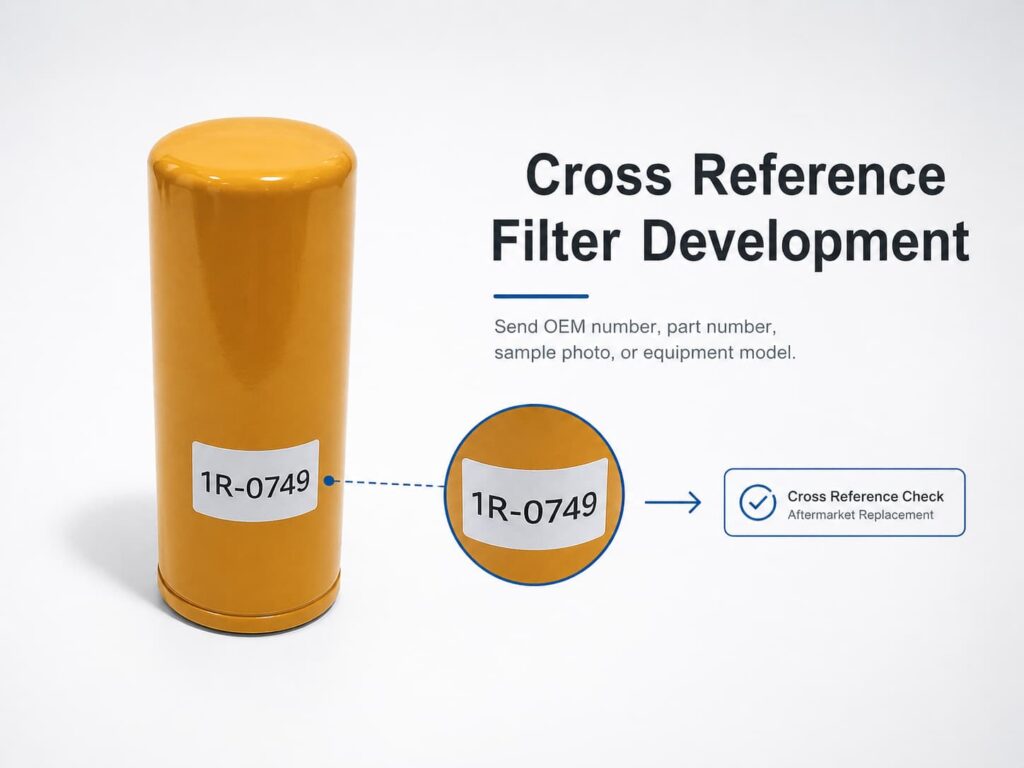
OEM numbers, cross reference numbers, old samples, drawings, product photos, and equipment models can all help confirm the correct replacement direction.
If the original mesh specification is unclear, buyers can send OEM numbers, cross reference numbers, old samples, photos, drawings, or dimensions for review. LSX Filter can help check the replacement direction through cross reference filter development and custom industrial filter dimensions before sample preparation or bulk orders.
Need help reviewing hydraulic filter mesh requirements?
Send your part number, old sample photos, dimensions, mesh specification, or application information. The LSX Filter can help review the replacement direction before sample preparation or bulk orders.
FAQ About Hydraulic Filter Mesh Size
These questions help buyers better understand mesh count, micron rating, stainless steel mesh, and replacement hydraulic filter sourcing.
Is mesh count the same as micron rating?
No. Mesh count describes the structure of a metal mesh layer, while micron rating describes the filtration accuracy of the filter media. In many hydraulic filters, metal mesh may only work as a support layer or protective layer, not the main filtration layer.
Is higher mesh count always better for hydraulic filters?
Not always. A higher mesh count usually means smaller openings, but it may also increase flow resistance. Hydraulic filter mesh should be selected according to application position, flow rate, pressure, oil viscosity, and required filtration accuracy.
What mesh size is commonly used for oil suction filters?
Oil suction filters often use coarser mesh to block larger particles before oil enters the hydraulic pump. The exact mesh size should be confirmed based on the original filter structure, pump protection requirement, and oil flow condition.
Can stainless steel mesh be used as the main filter media?
Yes. In some washable or reusable metal filter elements, stainless steel mesh can be used as the main filtration material. However, in many precision hydraulic filters, metal mesh is mainly used for support or protection, while the main filtration media may be glass fiber, synthetic fiber, or cellulose.
What information should I send when sourcing a replacement hydraulic filter?
Buyers can send OEM numbers, cross reference numbers, old samples, product photos, drawings, dimensions, mesh specifications, micron rating requirements, and equipment application information for review before replacement filter sourcing.