
Search by OEM Number
Start your filter lookup here.
Use an OEM number, reference number, product keyword, or equipment name to check available filter products.
Industrial Filter Element Materials Guide
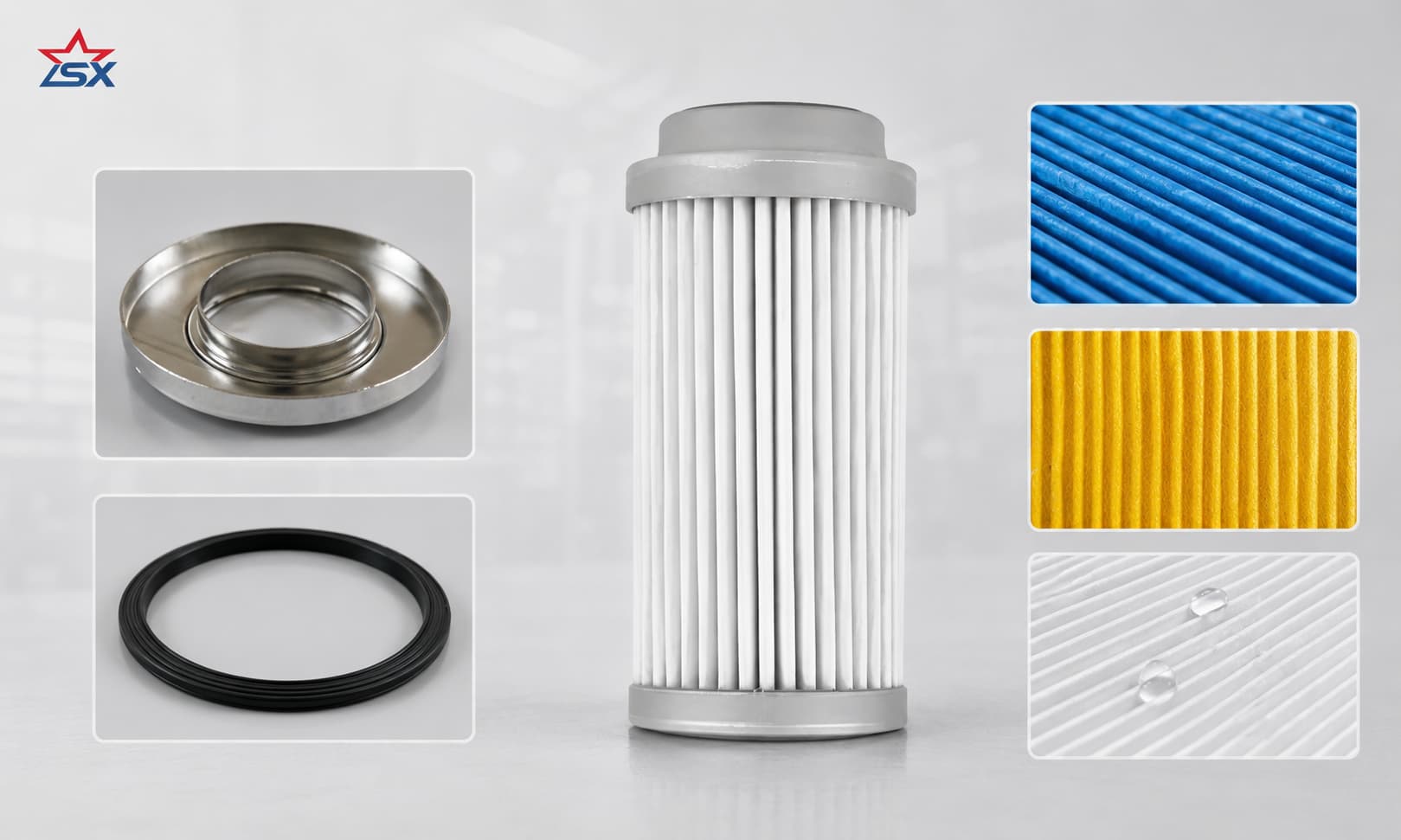
Industrial filter elements are built with different media, support structures, end caps, seals, and bonding materials. For hydraulic oil filters, lube oil filters, fuel filters, air filters, and other equipment filter elements, material selection affects filtration efficiency, pressure stability, service life, and replacement accuracy.
LSX Filter supports material review and custom filter element development based on part numbers, cross-reference numbers, old samples, drawings, dimensions, filtration rating, and working conditions. We can help buyers select suitable filter media, metal support structures, seal materials, end cap materials, and filter element configurations for OEM replacement, wholesale supply, and custom industrial filter projects.
Why Material Selection Matters for Industrial Filter Elements
For industrial replacement filter elements, material selection affects more than the visible filter shape. Filter media, support structure, end caps, seals, and bonding materials can influence filtration efficiency, flow stability, pressure resistance, service life, and replacement accuracy.
Filtration Efficiency
Different filter media materials affect how efficiently a filter element captures particles. For hydraulic oil, lube oil, fuel, air, and other industrial systems, the media should match the required filtration rating and cleanliness target.
Pressure and Flow Stability
A filter element must allow stable flow while maintaining the required filtration performance. If the media, support layer, or structure is not suitable, the filter may create excessive pressure drop or unstable system flow.
Dirt Holding Capacity
Dirt holding capacity affects how long a filter element can work before replacement is needed. For equipment maintenance, distributor inventory, and bulk replacement projects, this can influence service intervals and maintenance cost.
Material Compatibility
Filter media, seals, adhesives, end caps, and support structures should be compatible with the working medium. Hydraulic oil, lube oil, fuel, water-containing fuel, and air filtration may require different material combinations.
Service Life
The service life of a filter element depends on both media performance and structural stability. Support layers, metal cores, end caps, and bonding materials help the element maintain its shape during operation.
Replacement Accuracy
For replacement filter elements, similar dimensions do not always mean the same performance. Media type, seal material, end cap design, core structure, and filtration rating should be checked together when developing an OEM replacement filter.
Main Material Categories in Industrial Filter Elements
Industrial filter elements are usually built from several material groups, not only one type of filter paper. The filter media captures contaminants, while the support structure, seals, end caps, and bonding design help the element fit correctly and remain stable during operation. These material choices should also be reviewed together with filter element construction, including media structure, support core, end caps, seals, and flow path.
Filter Media
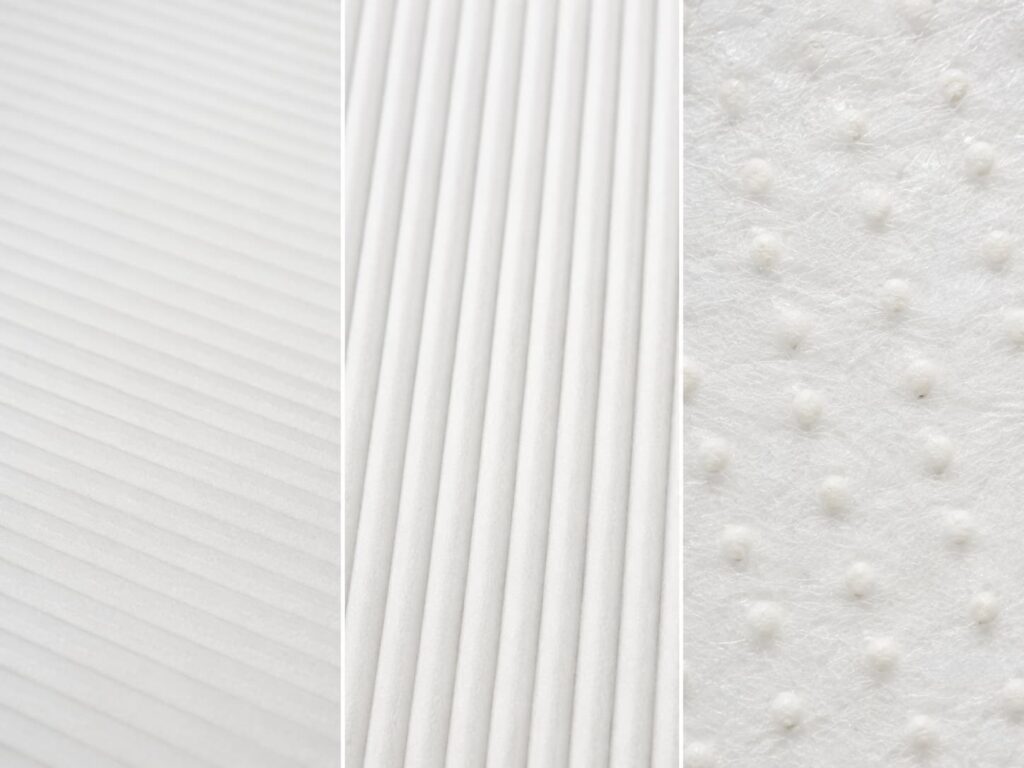
Filter media is the main material used to capture particles and control contamination. Common media options include glass fibre, synthetic fibre, and cellulose media, depending on the required filtration efficiency, flow condition, application, and replacement cost.
Glass fibre media is often used where fine filtration and stable contamination control are required. Synthetic fibre media can support broader industrial applications with balanced flow and structure. Cellulose media is commonly used for general-duty and cost-sensitive filtration needs.
Metal Support Structure
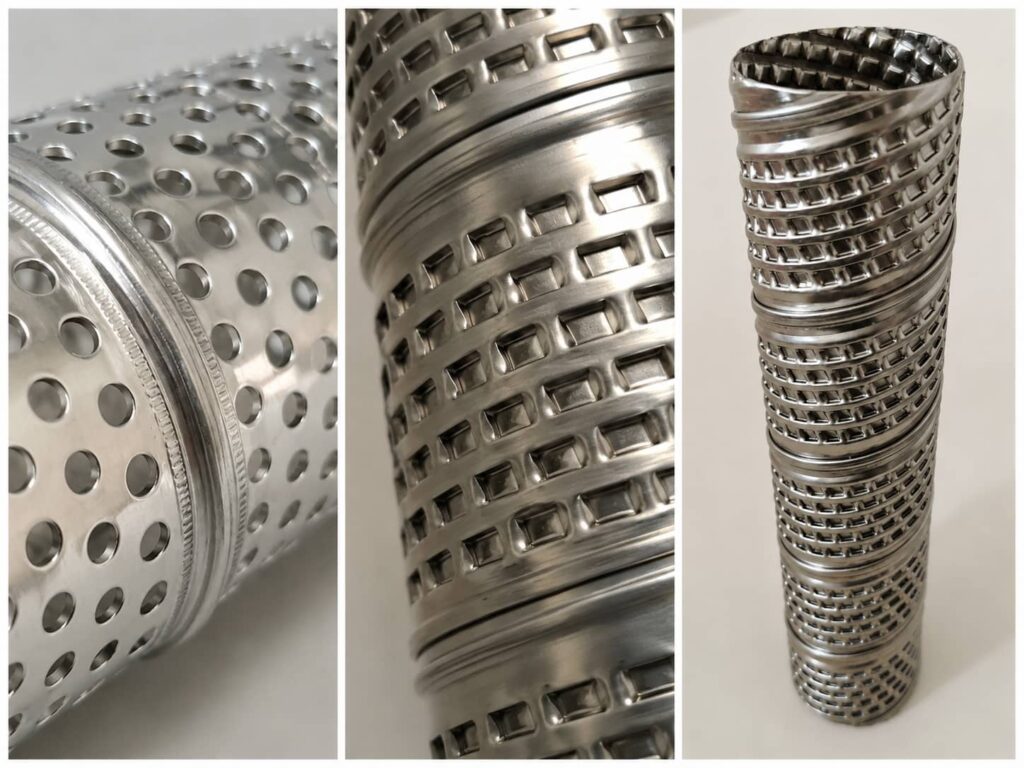
The metal support structure helps the filter element keep its shape under flow, pressure, and installation conditions. Common options include galvanised steel and stainless steel for inner cores, outer cages, support meshes, or perforated tubes.
Galvanised steel is widely used for standard industrial filter elements, while stainless steel may be selected for higher corrosion resistance, washable designs, or special operating environments.
Seals and Gaskets
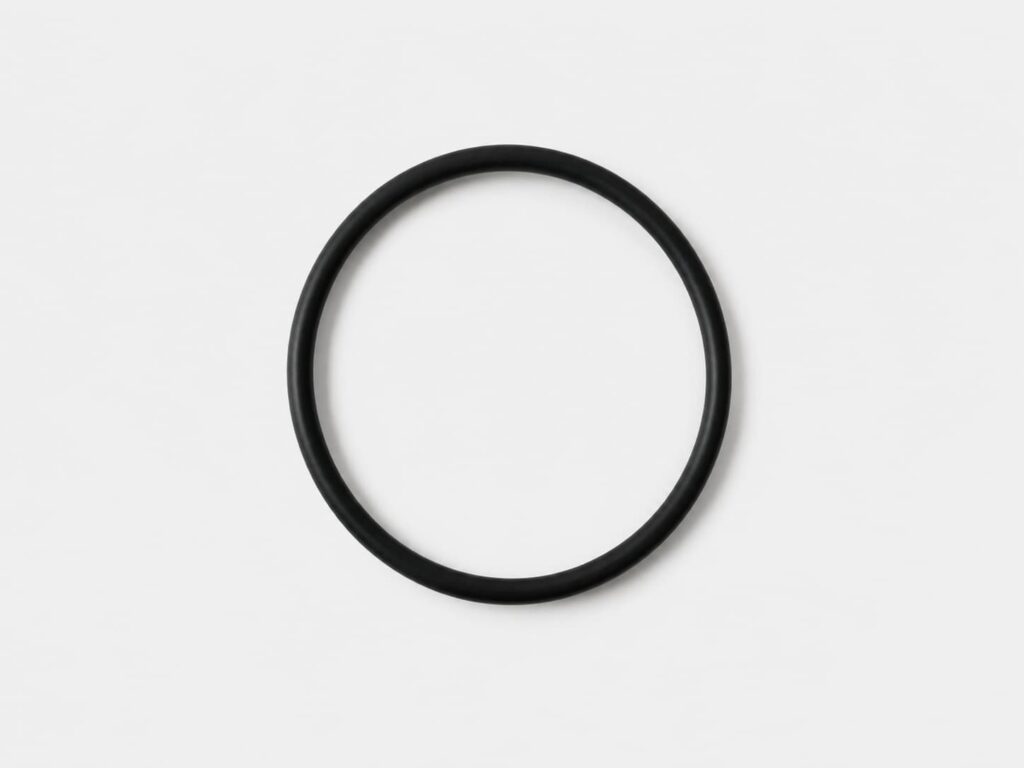
Seals and gaskets affect the fit, sealing performance, and fluid compatibility of a filter element. Common seal materials include NBR and FKM / Viton, depending on the working medium and temperature requirement.
NBR is widely used for many oil, fuel, and hydraulic applications. FKM / Viton is often selected when higher temperature resistance or stronger chemical compatibility is required.
End Caps
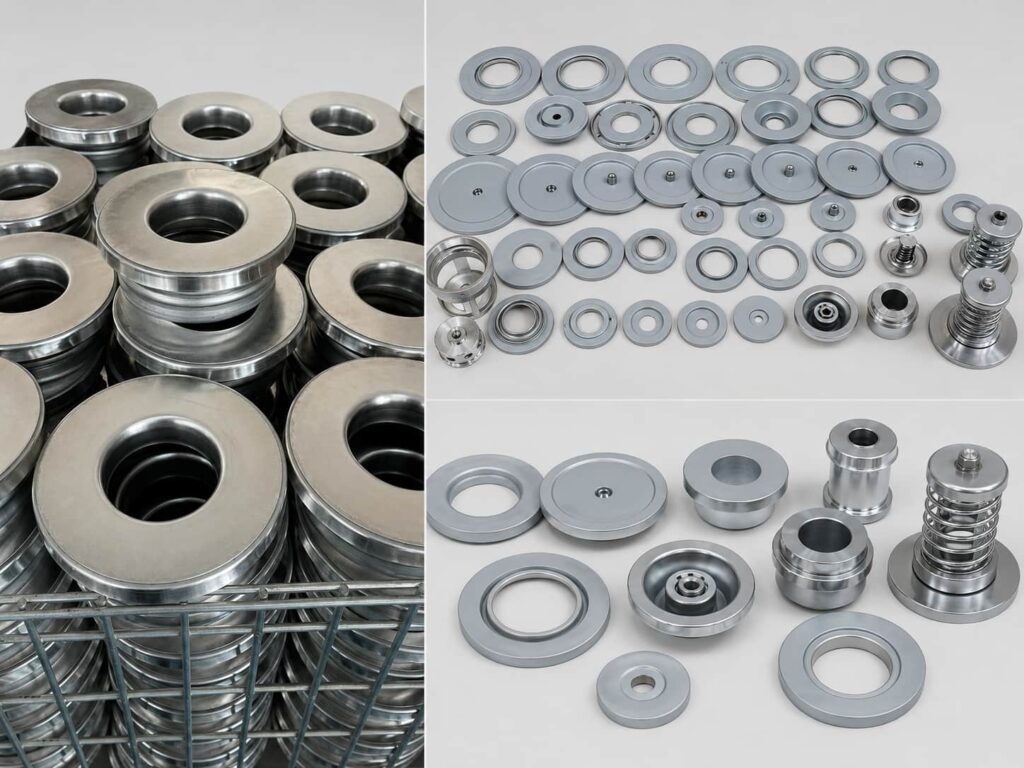
End caps help fix the filter media and connect the element with the housing or installation interface. Common end cap materials include stainless steel, galvanised steel, aluminium, polypropylene, and nylon.
The end cap material should match the filter structure, application, installation method, and sealing requirement. For OEM replacement filters, end cap shape, material, and bonding method should be checked together with the filter dimensions and sample details.
Material Selection by Filter Type
Different industrial filter elements require different material combinations. The following overview is a general reference for common material considerations by filter type. Final media, seal, end cap, and support structure should be confirmed according to the part number, sample, drawing, working medium, filtration rating, pressure, temperature, and installation requirements.
Hydraulic Oil Filters
Hydraulic oil filter elements may use different media and support structures depending on the filter position, micron rating, pressure condition, and flow requirement. Suction, return, and pressure line filters should be reviewed separately.
- Glass fiber media
- Synthetic fiber media
- Cellulose media
- Metal mesh
- Galvanized steel core
- Stainless steel support
- NBR / FKM seals
Lube Oil Filters
Lube oil filter elements usually need to balance oil flow, particle removal, dirt holding capacity, and service interval. Media selection should match the engine or lubrication system requirement.
- Cellulose media
- Synthetic fiber media
- Glass fiber media
- Blended media
- Metal end caps
- Galvanized steel core
- NBR / FKM seals
Fuel Filters
Fuel filter elements should be reviewed for fuel compatibility, particle removal, water contamination risk, and sealing performance. Media structure and seal material can affect performance in diesel fuel systems.
- Cellulose media
- Synthetic media
- Fuel-compatible media
- Water-resistant media
- Metal or plastic end caps
- NBR seals
- FKM seals
Fuel Water Separator Filters
Fuel water separator elements may require media designed for both particle filtration and water separation. Coalescing layers, water-repelling structures, seal compatibility, and end cap design should be checked together.
- Coalescing media
- Water-repelling media
- Synthetic media
- Cellulose-based media
- Metal end caps
- Plastic end caps
- NBR / FKM seals
Air Filters
Air filter elements usually focus on airflow, dust holding capacity, and media structure. Material selection should consider the dust environment, equipment type, airflow requirement, and replacement interval.
- Cellulose media
- Synthetic media
- Polyester media
- Nanofiber media if required
- Plastic end caps
- Metal end caps
- PU / rubber seals
How We Confirm Materials for Replacement Filter Elements
Buyers do not need to determine every material detail before sending an inquiry. You can provide the working conditions, product model, equipment information, part number, sample, drawing, or key dimensions. LSX Filter can review the filter media, metal structure, end caps, seals, filtration rating, and dimensions according to the actual application, or produce the replacement element according to the original material configuration.
Start with the Available Information
Material review can start from an OEM number, cross reference number, product model, equipment model, clear photos, drawings, or an old filter sample. This helps us identify the replacement direction before confirming the material details.
Check the Working Conditions
The required material combination depends on where the filter is used and what it filters. Hydraulic oil, lube oil, fuel, water-containing fuel, air, pressure, temperature, flow, and service interval can all affect the media and seal selection.
Review the Original Sample or Dimensions
If you have an old filter sample, we can check the media, core, end cap, gasket, bonding, and installation structure. If no sample is available, filter dimensions and photos can also help with material confirmation.
Information That Helps Confirm Filter Materials
- OEM number or cross reference number
- Product model or filter part number
- Equipment brand and model
- Old filter sample or clear photos
- Working medium, such as oil, fuel, or air
- Filtration rating or micron requirement
- Pressure, flow, and temperature conditions
- End cap, seal, and core structure
- Main dimensions and installation interface
- Required quantity and replacement purpose
Original Material or Custom Material
For direct replacement projects, LSX Filter can follow the original filter material, structure, dimensions, and sealing design as closely as possible based on the available sample, drawing, part number, or technical information.
For custom filter projects, we can adjust the filter media, support structure, end cap, seal material, filtration rating, and dimensions according to the application, working conditions, and purchase requirements.
Related Custom Filter Support
View the full custom filter support overview, including media, dimensions, structure, micron rating, cross-reference, packaging, and category support.
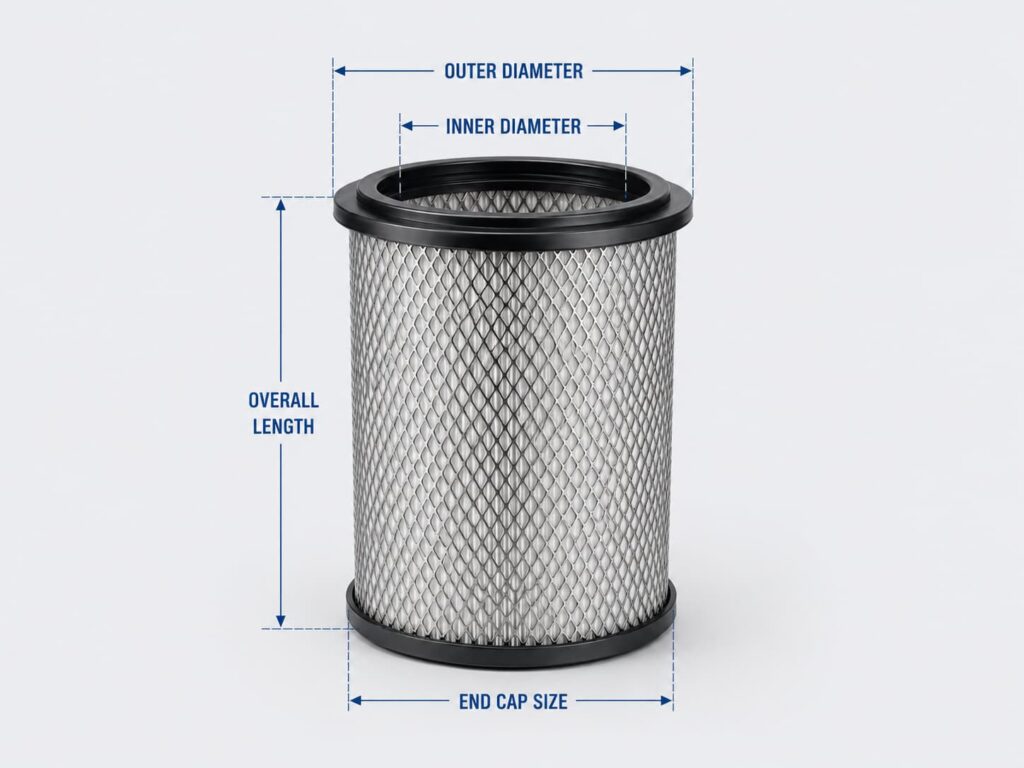
Custom Filter Dimensions Based on Samples or Drawings
Review filter dimensions based on old samples, drawings, product photos, videos, or basic measurements.
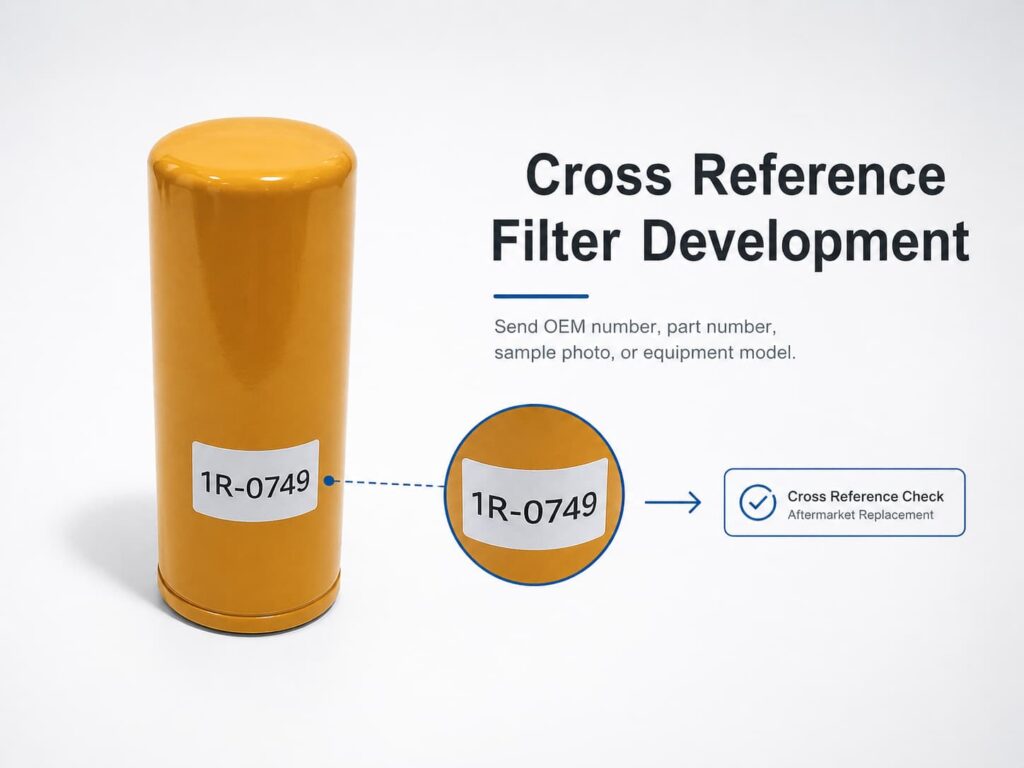
Develop replacement filters based on OEM numbers, cross reference numbers, competitor part numbers, samples, or equipment models.
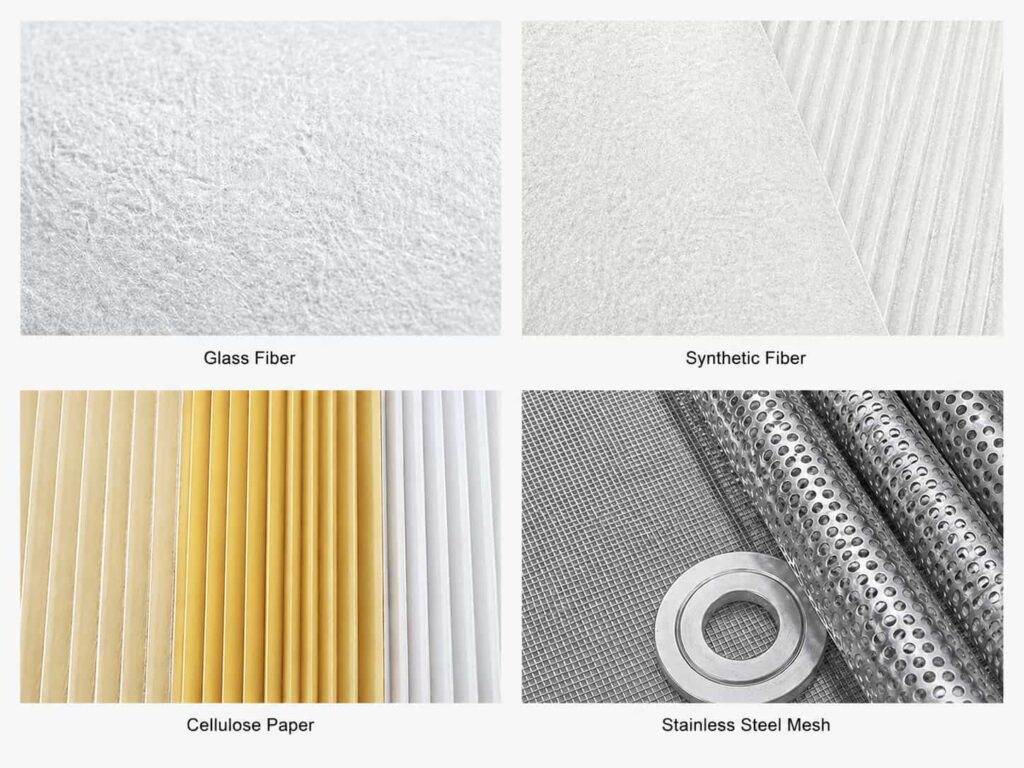
Select suitable filter media according to working medium, filtration requirement, and service environment.
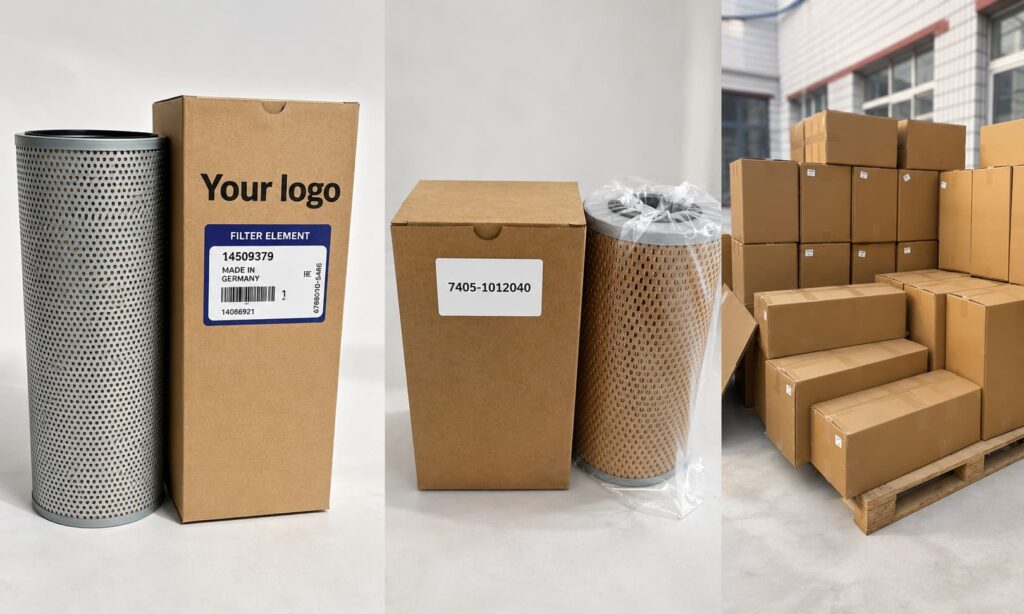
Custom packaging and private label support for industrial filters, including paper boxes, logo printing, labels, plastic bags, shrink film, and cartons.
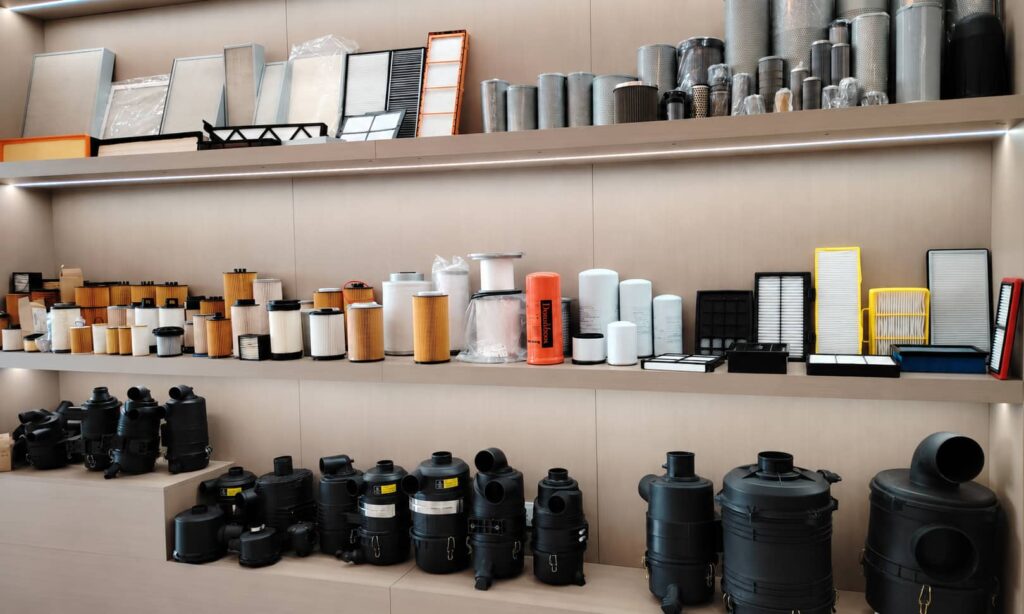
For projects without complete part numbers, LSX Filter can review old filter samples, clear photos, videos, equipment models, and basic application information before sample preparation.
Industrial Filter Element Material FAQ
These questions help buyers understand how LSX Filter reviews filter media, support structure, end caps, seals, dimensions, and working conditions for replacement and custom industrial filter elements.
Can LSX Filter help choose the material if I only know the filter part number?
Yes. If you can provide an OEM number, cross reference number, or product model, LSX Filter can review the possible replacement direction and material requirements. For part number matching projects, our cross reference filter development service can help confirm whether additional sample, dimension, or application information is needed.
Can you produce the replacement filter with the original material configuration?
Yes. For direct replacement projects, we can follow the original filter material, structure, end cap, seal, filtration rating, and dimensions as closely as possible based on the available sample, drawing, part number, or technical information.
Can the filter media be changed for a custom filter element?
Yes. Filter media can be reviewed or adjusted according to the working medium, filtration rating, pressure, flow requirement, service interval, and cost target. Common media options include glass fiber, synthetic fiber, and cellulose media, depending on the filter type and application.
What information should I send for material confirmation?
Useful information includes the part number, equipment model, working medium, filtration rating, pressure, temperature, main dimensions, required quantity, photos, drawings, or an old filter sample. If you have a used element, our custom filter sample support service can help review the media, core, end cap, gasket, and installation structure.
Do seal and end cap materials need to match the filter application?
Yes. Seal and end cap materials should be checked together with the working medium, temperature, housing interface, and installation dimensions. NBR and FKM / Viton are common seal options, while end caps may use stainless steel, galvanized steel, aluminum, polypropylene, or nylon depending on the filter design.
Can LSX Filter customize filter dimensions and filtration rating together with material selection?
Yes. Material selection can be reviewed together with overall length, outer diameter, inner diameter, thread or opening structure, seal groove, end cap design, and filtration rating. For dimension-based replacement projects, you can refer to our custom industrial filter dimensions support page.