
Search by OEM Number
Start your filter lookup here.
Use an OEM number, reference number, product keyword, or equipment name to check available filter products.
Industrial Filter Element Construction Explained
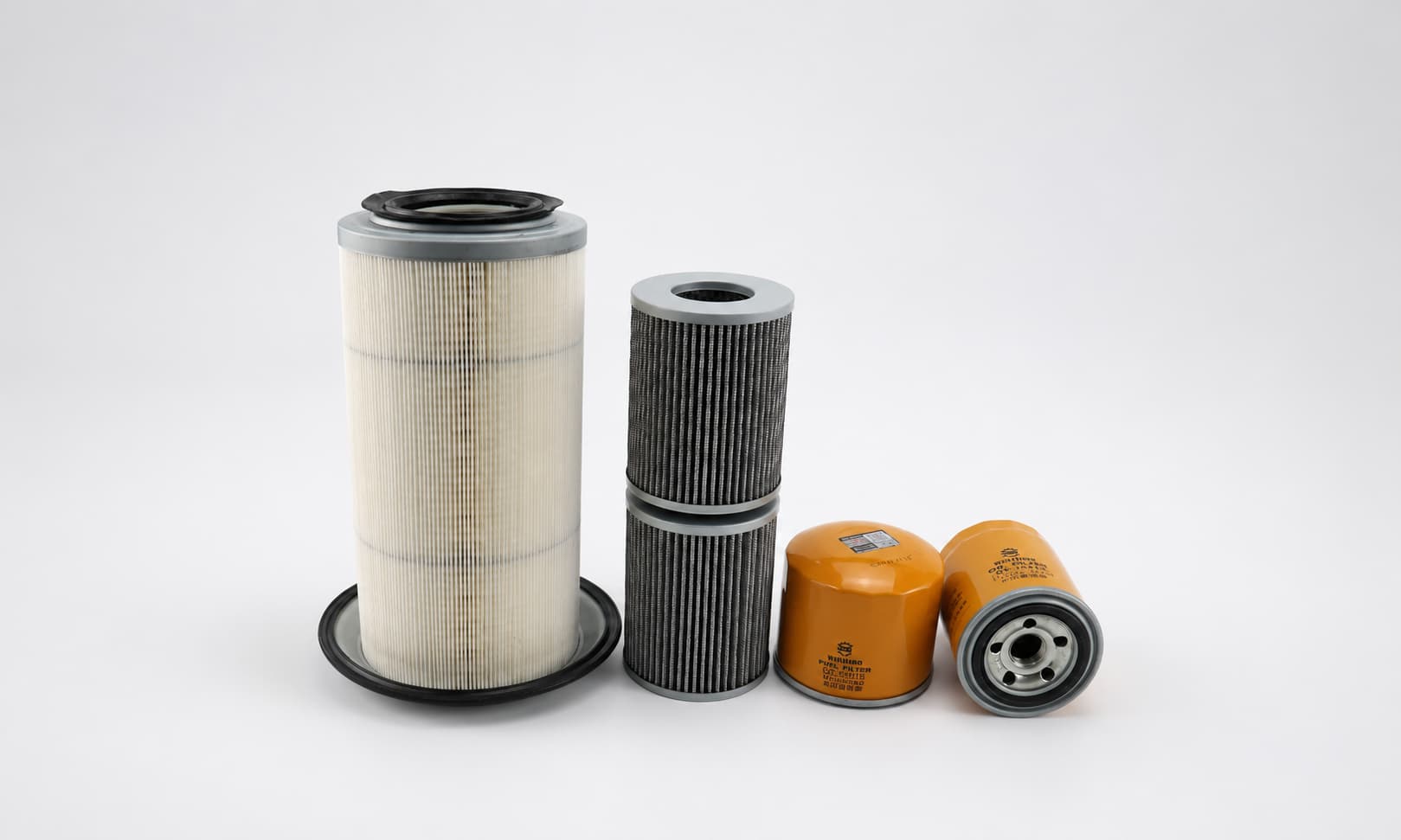
Industrial filter elements are not all built the same way. Hydraulic oil filter elements, lube oil and engine oil filters, and air filter elements may use different media structures, support cores, end caps, seals, flow paths, and installation interfaces.
For OEM replacement and custom filter projects, construction details should be reviewed together with the part number, old sample, drawing, dimensions, equipment model, and working conditions. LSX Filter can help confirm the original construction for direct replacement or adjust the filter media, support structure, end caps, seals, filtration rating, and dimensions according to your application requirements.
Why Filter Element Construction Matters
Filter element construction affects how a replacement filter fits, seals, flows, and performs inside the equipment. Even when two filters look similar in size, differences in end cap design, gasket position, support core, media structure, or flow path may affect installation and replacement performance.
Installation Fit
The filter element must match the housing, thread, opening, end cap shape, and installation space. Small construction differences may cause poor fit even when the overall size looks similar.
Sealing Performance
Seal position, gasket material, end cap design, and sealing edge can affect whether the filter works correctly inside the housing. Poor sealing may lead to leakage, bypass, or unfiltered air or oil.
Flow Direction
Some filter elements have specific inlet and outlet directions. Media structure, center tube, valve design, and support layers should be checked to make sure oil or air flows through the element as intended.
Replacement Accuracy
A correct replacement filter should match more than the visible dimensions. Media structure, support core, end caps, seals, interface design, and special structures should be reviewed together.
Key Filter Element Construction Areas to Review
Different industrial filter elements may use different structural designs. During replacement filter development, LSX Filter usually reviews several key construction areas, including the media structure, support core or frame, end caps, seals, flow path, and overall dimensions. These details help confirm whether the replacement filter can fit correctly, seal properly, and meet the required working conditions.
Filter Media Structure
Filter media structure includes pleat design, media layers, filtration area, and material type. Hydraulic oil filters, engine oil filters, and air filters may use different media structures according to flow, pressure, dust load, or filtration rating. For material options, see our filter element material selection guide.
Support Core or Frame
Support structures help the filter element maintain its shape during operation. Depending on the filter type, this may include a metal center tube, perforated core, outer cage, plastic frame, PU frame, or support mesh.
End Caps and Bonding
End caps and bonding methods help fix the media and connect the filter element with the housing or installation interface. Metal, plastic, aluminum, or PU end structures may be used depending on the filter design.
Seals and Gaskets
Seals and gaskets help prevent leakage, bypass, or unfiltered air and oil from passing through the system. The seal material, shape, position, and contact surface should match the housing and working medium.
Flow Path and Interface
Flow path and interface design affect how oil or air enters and exits the filter element. For some filter types, thread design, inlet holes, valve structure, center tube, or installation direction should be checked before replacement.
Overall Dimensions
Overall dimensions include outer diameter, inner diameter, height, thread size, opening size, seal groove, end cap shape, and installation interface. These details help confirm whether the replacement element can fit the housing correctly. See our custom industrial filter dimensions support page for dimension-based projects.
Construction Differences by Filter Type
Different filter types are designed for different working media, pressure conditions, airflow requirements, and installation housings. For this reason, LSX Filter reviews filter construction according to the actual filter type instead of using one standard structure for all replacement filters.

Hydraulic Oil Filter Elements
Hydraulic oil filter elements usually require attention to media strength, metal support structure, end cap design, seal material, filtration rating, and flow direction. Return line, suction line, and pressure line filters may use different construction requirements, so the working position and hydraulic system condition should be reviewed before replacement.
Lube Oil / Engine Oil Filters
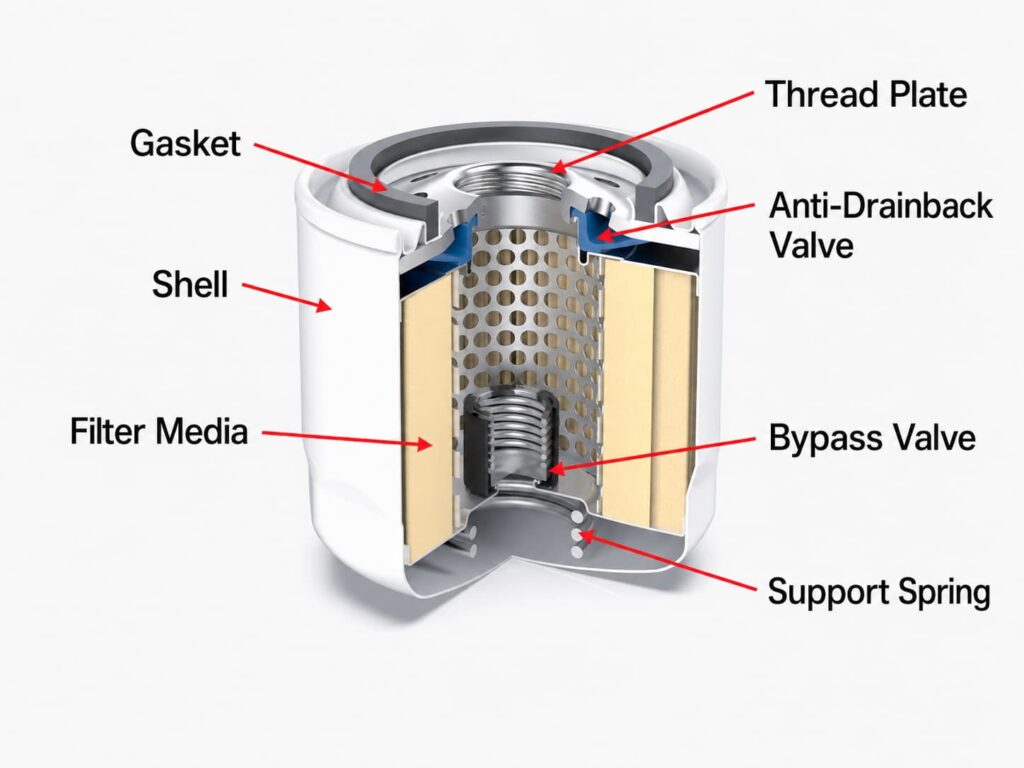
Lube oil and engine oil filters may include cartridge-type elements or spin-on filter structures. For spin-on filters, the thread plate, gasket position, inlet holes, internal spring, bypass valve, anti-drainback valve, and oil flow path should be checked together with the part number and equipment application.
Air Filter Elements
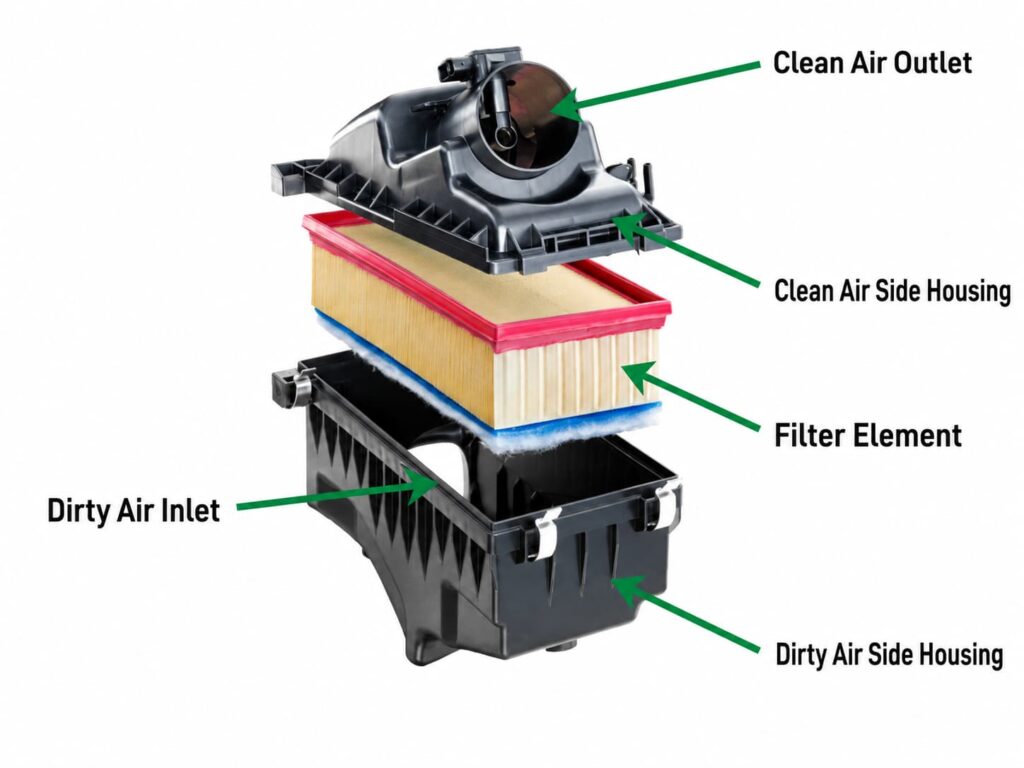
Air filter elements focus more on airflow area, pleat structure, sealing edge, frame design, and dust-holding capacity. The filter must fit the housing correctly and seal around the edge to help prevent unfiltered air from entering the intake system.
Information That Helps Confirm Filter Construction
To confirm the correct filter construction, LSX Filter reviews the available product information together with the working conditions. You can send a part number, cross reference number, old sample, photos, drawing, dimensions, equipment model, or application details. Our team will check the structure and advise whether the replacement filter should follow the original design or use a customized construction.
If you only have a part number or cross reference number, LSX Filter can review the replacement direction first.
An old filter sample or clear photos can help confirm end cap shape, seal position, media structure, and internal support design.
For custom or non-standard filters, filter dimensions such as OD, ID, height, thread, opening, and gasket size should be checked together.
Helpful Details to Send
- Filter type
- Part number or cross reference number
- Equipment brand and model
- Old filter sample or clear photos
- Outer diameter, inner diameter, and height
- Thread, opening, or installation interface
- Seal or gasket size
- End cap shape
- Flow direction if known
- Bypass valve or special structure if applicable
- Working medium and pressure / airflow condition
- Required quantity
FAQ About Industrial Filter Element Construction
These questions help buyers understand how filter construction is reviewed for OEM replacement and custom industrial filter projects.
Are all industrial filter elements built with the same construction?
No. Hydraulic oil filter elements, lube oil filters, engine oil filters, and air filter elements may use different media structures, support cores, end caps, seals, flow paths, and installation interfaces. The construction should be reviewed according to the actual filter type and working condition.
Can LSX Filter copy the original construction from a sample?
Yes. An old filter sample or clear photos can help confirm the media structure, end cap shape, seal position, support core, and other construction details. This is useful when the part number alone is not enough to confirm the replacement design.
What construction details should be checked for hydraulic oil filter elements?
Hydraulic oil filter elements usually need to be checked for media strength, support core structure, end cap design, seal material, filtration rating, flow direction, and working position. Return line, suction line, and pressure line filters may require different construction details.
What construction details are important for spin-on oil filters?
Spin-on oil filters may require checking the gasket position, thread plate, inlet holes, shell size, internal spring, bypass valve, anti-drainback valve, and oil flow path. These details should be reviewed together with the part number, equipment model, and application.
Can filter construction be customized for special applications?
Yes. For custom filter projects, LSX Filter can review the working medium, pressure, airflow requirement, filtration rating, installation space, seal material, and filter dimensions before suggesting a suitable construction design.
Can you confirm filter construction from a cross reference number?
In many cases, a cross reference number can help start the replacement review. However, for filters with special structures, valve designs, non-standard seals, or unclear applications, LSX Filter may also request photos, dimensions, drawings, or sample details.