In a hydraulic system, not every hydraulic filter works in the same position or under the same pressure conditions. A suction filter, a pressure line filter, and a return filter may all remove contaminants from hydraulic oil, but their design requirements differ.
For replacement and custom filter production, the filter position is an important detail. It affects the filtration rating, flow capacity, pressure resistance, bypass valve setting, filter media selection, centre tube strength, and sealing structure.
This article explains the main differences among suction filters, pressure line filters, and return filters from practical factory and procurement perspectives.
Quick Summary
Suction filters are used before the pump and usually focus on high flow and low restriction. Pressure line filters are used after the pump and must withstand high system pressure while protecting precision hydraulic components. Return filters are installed before oil returns to the tank and are commonly used to control system contamination with higher dirt-holding capacity.
Why Filter Position Matters in a Hydraulic System
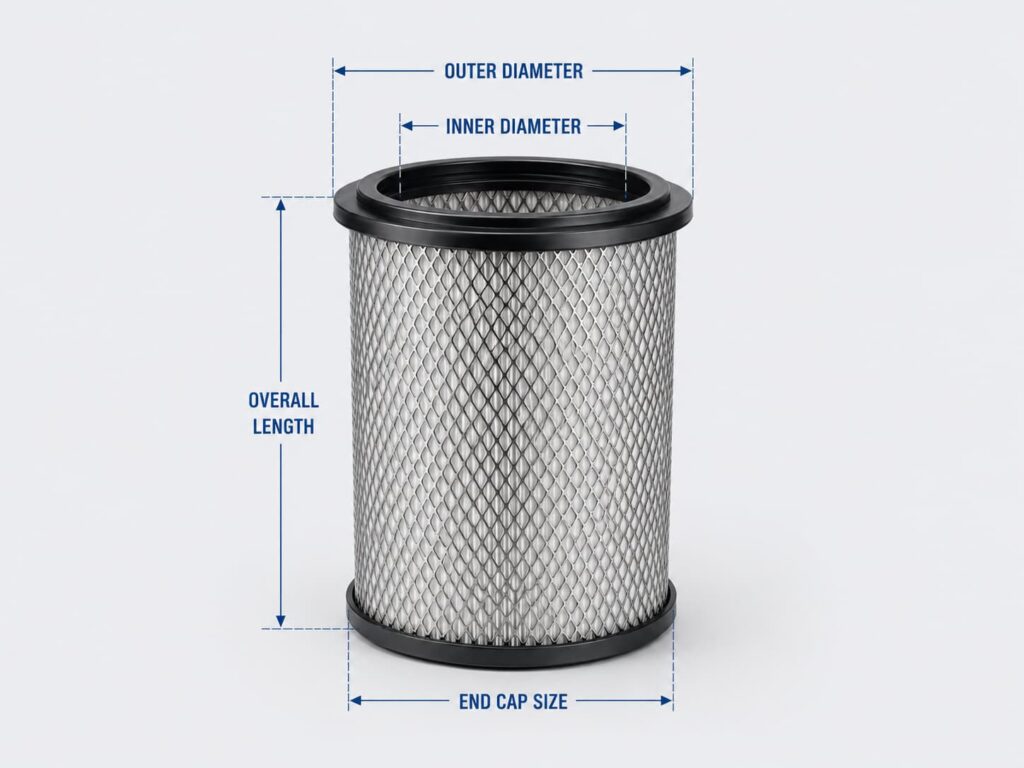
When buyers search for replacement hydraulic filters, they often provide a part number, thread size, outer diameter, length, or a sample. These details are useful, but they are not always enough.
A hydraulic filter element should also be checked according to its working position in the system.
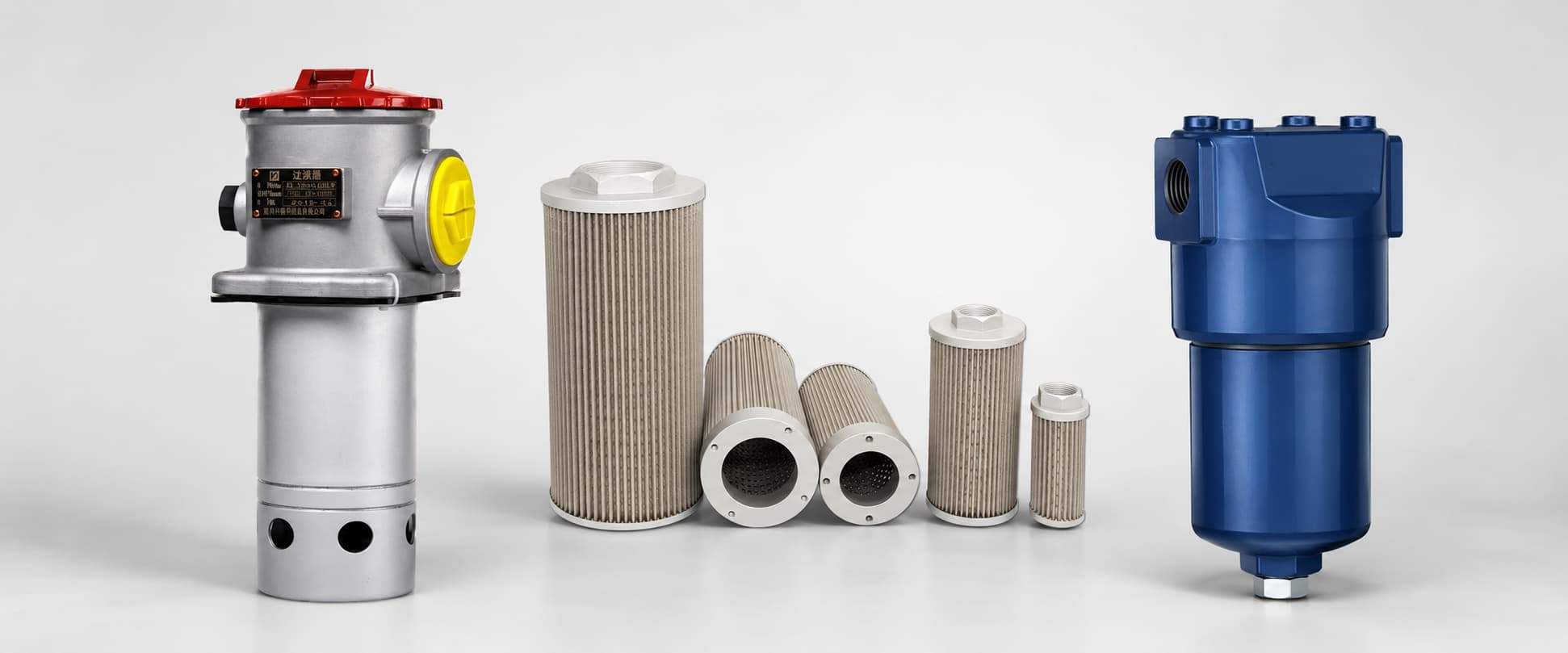
The same micron rating or similar appearance does not mean two filters can be used interchangeably. A filter used in the suction line may require low pressure drop and a large flow area. A pressure line filter may need a reinforced structure to handle high pressure. A return line filter may need a larger dirt-holding capacity for continuous oil cleanliness control.
From a manufacturing point of view, the filter position helps determine:
- Filtration rating
- Filter media type
- Pleat structure
- Centre tube strength
- End cap and adhesive design
- Bypass valve requirement
- Seal material
- Flow direction
- Pressure resistance requirement
What Is a Suction Filter?
A suction filter is usually installed between the hydraulic oil tank and the pump inlet. Its main purpose is to prevent larger contaminants from entering the pump.
Because this filter is located before the pump, the most important design concern is not fine filtration. It is a smooth oil supply.
If the suction filter is too fine, too small, or already clogged, it may increase inlet restriction. This can affect pump oil supply and may contribute to cavitation risk in severe cases.
Typical Features of Suction Filters
Suction filters usually work under low-pressure conditions. They often use metal mesh or coarse filter media to allow enough oil flow into the pump.
Common filtration ratings are often in the range of 60–150 μm, depending on the equipment design. Some systems may use finer or coarser ratings, but suction filters are generally not selected as the main fine filtration stage.
Key Design Point
For suction filters, the priority is:
High flow capacity + low pressure drop + pump protection
A suction filter should not be selected only by choosing a smaller micron rating. In many hydraulic systems, an overly fine suction filter can create more problems than benefits.
What Is a Pressure Line Filter?
A pressure line filter is installed after the hydraulic pump, usually before valves, hydraulic motors, cylinders, servo valves, or proportional valves.
This type of filter works under higher pressure than suction and return filters. Its purpose is to protect precision hydraulic components from fine particles.
In systems with servo valves or proportional valves, small particles can cause wear, blockage, response delay, or control instability. This is why pressure line filters often require finer filtration and stronger structural design.
Typical Features of Pressure Line Filters
Pressure line filters may need to withstand system pressures such as 16 MPa, 25 MPa, 31.5 MPa, or higher, depending on the hydraulic system.
Common filtration ratings are often 3–10 μm for precision hydraulic systems, while some general systems may use 10–20 μm.
The filter element usually requires:
- High-strength centre tube
- Stable pleated media structure
- Proper sealing design
- Differential pressure resistance
- Suitable bypass valve setting if required
- Compatibility with hydraulic oil and working temperature
Key Design Point
For pressure line filters, the priority is:
Pressure resistance + fine filtration + component protection
A pressure line filter cannot be replaced by matching only the size. The structure must be suitable for the pressure conditions of the system.
What Is a Return Filter?
A return filter is installed in the return line before hydraulic oil flows back into the tank. Its purpose is to remove contaminants generated during system operation before the oil returns to the reservoir.
Compared with suction filters, return filters usually provide finer filtration. Compared with pressure line filters, they usually work under lower pressure but may require larger dirt-holding capacity.
Return filters are widely used in construction machinery, agricultural machinery, hydraulic stations, industrial equipment, lifting equipment, and mobile hydraulic systems.
Typical Features of Return Filters
Return filters commonly use filtration ratings such as 10–25 μm, depending on the cleanliness requirement of the system.
Because return oil may carry wear particles from cylinders, valves, pumps, and hoses, the return filter should have enough contaminant-holding capacity. In some designs, magnets may also be used to capture ferrous particles.
Key Design Point
For return filters, the priority is:
System cleanliness + dirt-holding capacity + stable return flow
Return filters are often replaced regularly because they collect contamination from the whole hydraulic circuit. However, the replacement interval should depend on working hours, oil condition, pressure differential indication, and actual equipment environment, not only a fixed calendar period.
Comparison Table: Suction Filter, Pressure Line Filter, and Return Filter
| Filter Type | Installation Position | Main Function | Typical Filtration Rating | Main Design Requirement |
|---|---|---|---|---|
| Suction Filter | Between oil tank and pump inlet | Protects the pump from larger particles before oil enters the hydraulic pump | Often 60–150 μm | High flow capacity and low inlet restriction |
| Pressure Line Filter | After the pump, before valves, actuators, or precision hydraulic components | Protects valves, hydraulic motors, cylinders, servo valves, and proportional valves | Often 3–10 μm or 10–20 μm | High pressure resistance, stable media structure, and fine filtration |
| Return Filter | Before hydraulic oil returns to the tank | Removes contaminants generated during system operation before oil returns to the reservoir | Often 10–25 μm | Dirt-holding capacity and stable return flow |
These ranges are common references. The final filter selection should always be based on the original filter specification, hydraulic system design, oil type, working pressure, flow rate, and cleanliness requirement.
Can These Hydraulic Filters Be Interchanged?
In most cases, suction filters, pressure line filters, and return filters should not be used interchangeably.
Even if two filter elements look similar, they may have different internal structures and working requirements.
For example, a suction filter may not have enough filtration efficiency for a precision valve system. A return filter may not be designed to withstand pressure line conditions. A pressure line filter may be structurally stronger, but it may not always be suitable for suction use if the flow resistance is too high.
The main differences include:
- Working pressure
- Flow direction
- Filtration rating
- Filter media structure
- Centre tube strength
- Bypass valve setting
- Seal material
- Dirt-holding capacity
- Installation position
For replacement filters, the correct approach is not only to match the outer size. The filter should also match the hydraulic system position and operating condition.
What Information Should Buyers Provide for Replacement or Custom Hydraulic Filters?
When sourcing a hydraulic filter element, providing more accurate information can reduce the risk of the wrong replacement.
For standard replacement projects, buyers can provide:
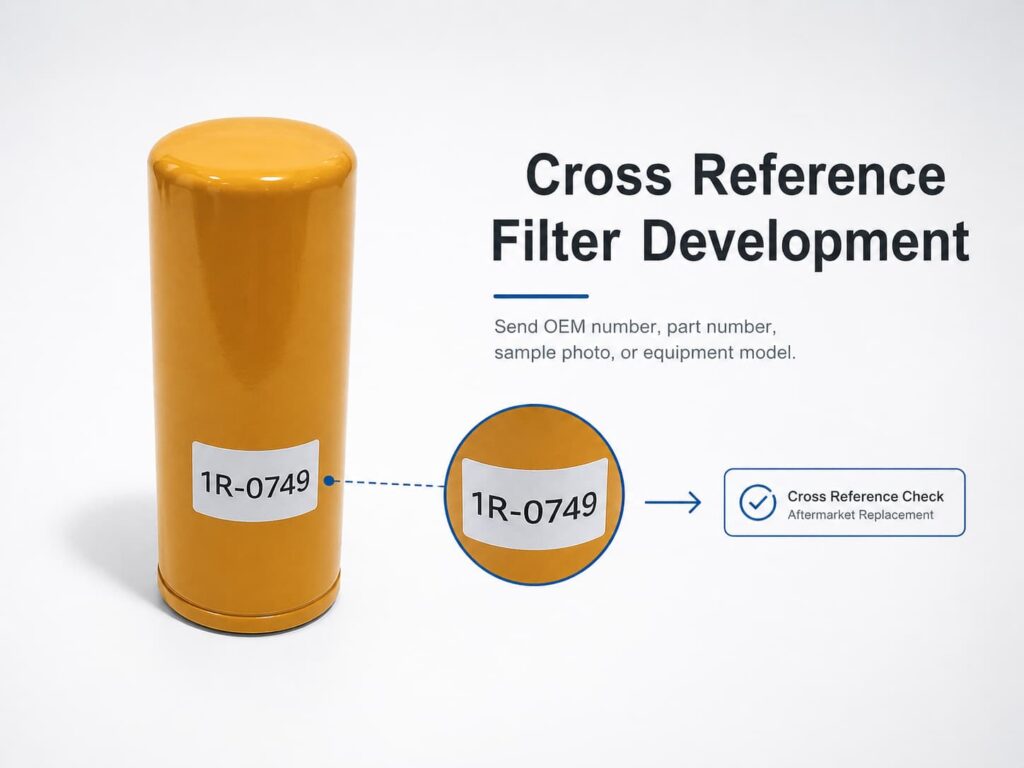
- OEM number or cross-reference number
- Filter type or installation position
- Overall length
- Outer diameter
- Inner diameter
- Thread size or connection type
- Seal type and seal size
- Filtration rating
- Application equipment
- Photos or sample filter
For custom hydraulic filter production, additional details may be needed:
- Working pressure
- Flow rate
- Hydraulic oil type
- Working temperature
- Required micron rating
- Bypass valve requirement
- End cap material
- Filter media requirement
- Quantity and packaging requirements
If the original part number is unclear, a physical sample, technical drawing, or detailed dimension photos can help confirm the filter structure.
Factory Notes for Hydraulic Filter Matching
At LSX Filters, hydraulic filter matching is not based only on product appearance. For replacement and custom filter production, we check the filter structure, sealing position, media type, flow direction, and application condition.
For suction filters, we pay attention to flow area and low restriction.
For pressure line filters, we check structural strength, media stability, and pressure-related requirements.
For return filters, we focus on dirt-holding capacity, filtration efficiency, and stable oil return.
This is especially important for aftermarket filters, cross-reference development, and small-batch custom filter projects.
FAQ
What is the main difference between a suction filter and a return filter?
A suction filter is installed before the pump and mainly protects the pump from larger particles. A return filter is installed before oil returns to the tank and is used to remove contaminants generated during hydraulic system operation.
Why are suction filters usually not too fine?
A suction filter must allow enough oil to enter the pump. If the filtration rating is too fine or the filter becomes clogged, it may increase inlet restriction and affect pump oil supply.
Why do pressure line filters need stronger construction?
Pressure line filters work after the pump and may face high hydraulic pressure. The filter element often needs stronger center tube support, stable pleated media, and proper sealing design.
What micron rating is common for hydraulic filters?
It depends on the system position and cleanliness requirement. Suction filters are often coarser, such as 60–150 μm. Pressure line filters may use 3–10 μm or 10–20 μm. Return filters are commonly around 10–25 μm.
Can I replace a hydraulic filter only by matching the size?
Size is important, but it is not enough. The filter position, working pressure, filtration rating, flow requirement, seal type, and bypass valve design should also be checked before replacement.