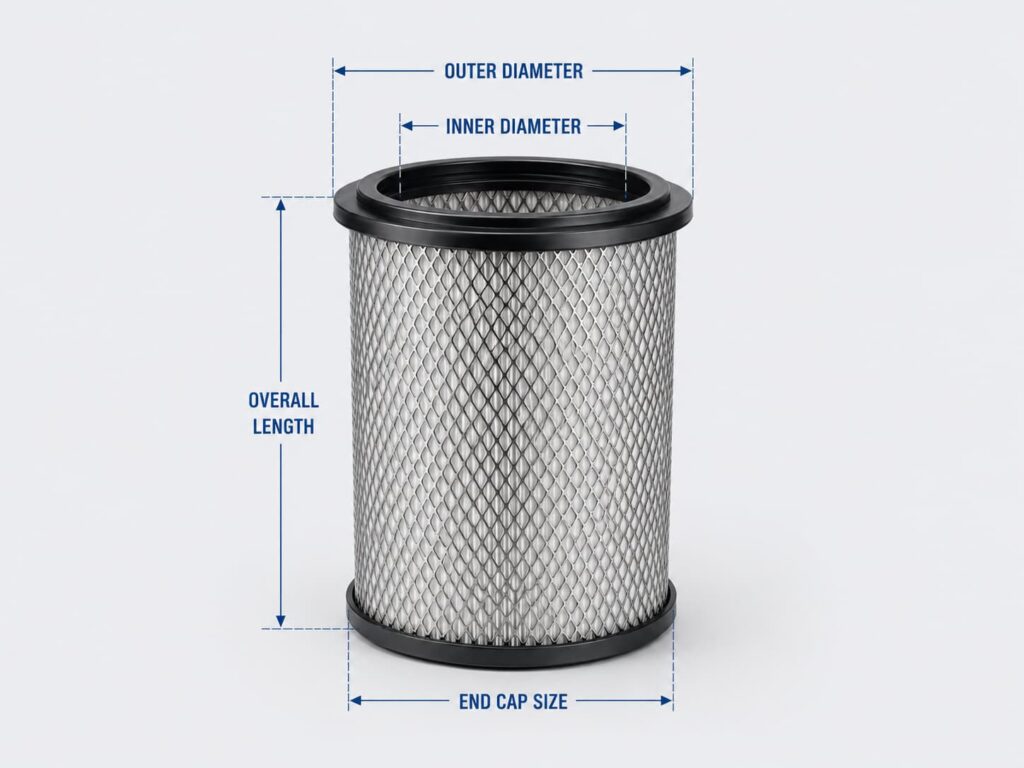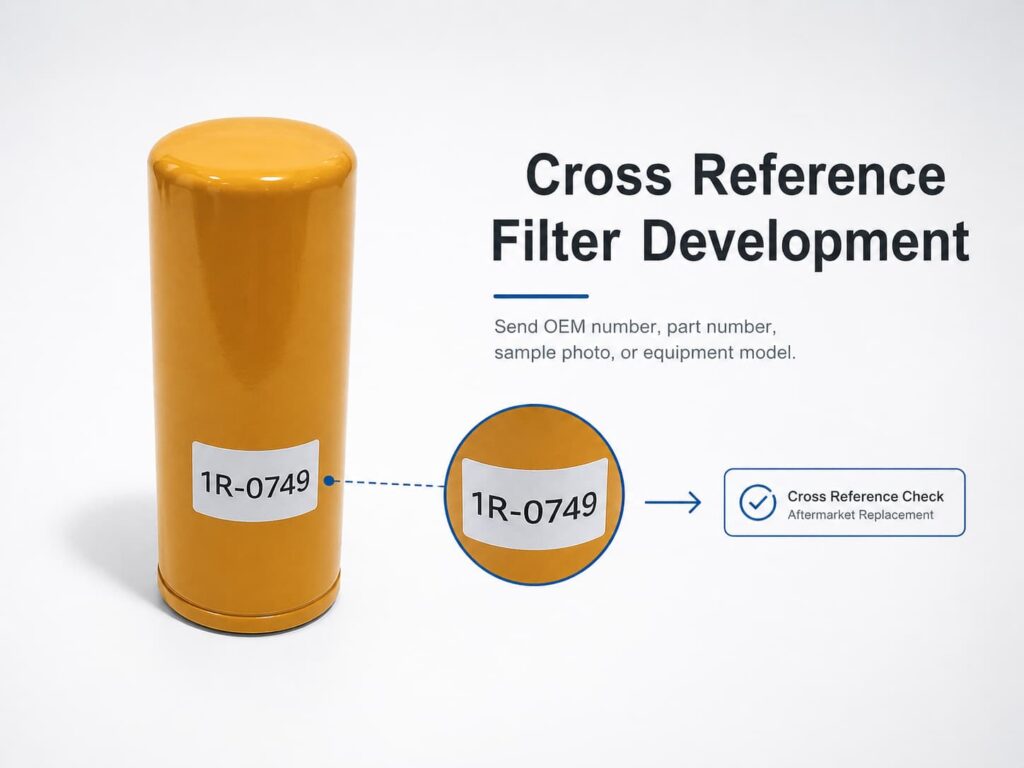
Excavators use multiple filtration systems to ensure stable engine performance, hydraulic efficiency, and system reliability.
If we compare an excavator to the human body:
- The engine is the heart
- The filter system is the lungs and the protection network
- Hydraulic oil circulation is the muscle system
Filters ensure that each system operates with clean oil, clean air, and clean fuel.
Air Filtration System (Engine Intake Protection)
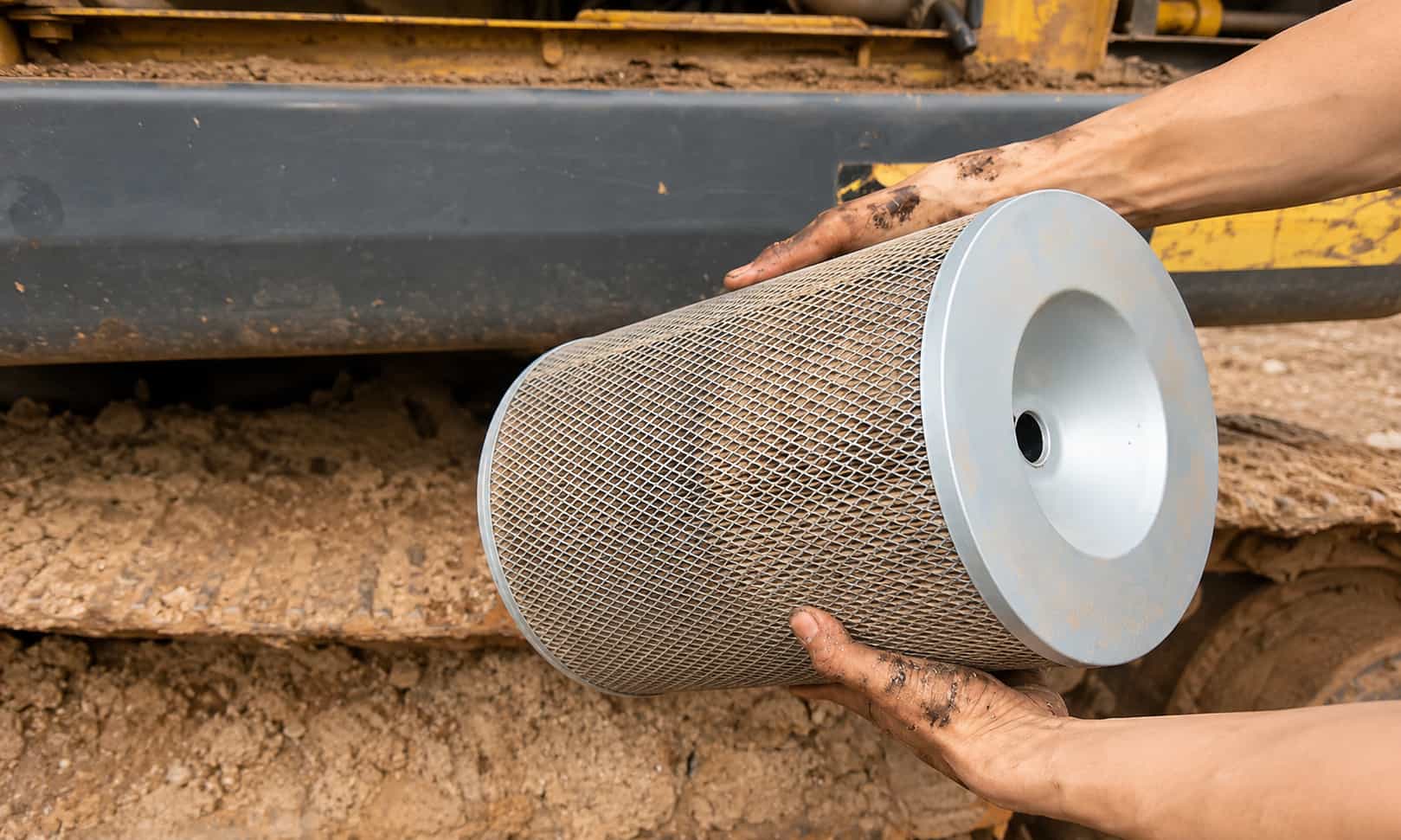
The air filter system provides clean air for the engine combustion process.
It typically includes inner and outer air filters, working together as a dual-layer protection system.
Function:
- Supply clean air to the intake system
- Remove dust, sand, and airborne particles
- Protect combustion efficiency and engine life
Without proper air filtration, dust enters the combustion chamber and accelerates engine wear.
Engine Oil Filtration System (Lubrication Protection)

The oil filter system ensures that the engine lubrication oil remains clean during circulation.
Function:
- Remove metal particles generated by engine wear
- Remove carbon deposits and impurities
- Maintain stable lubrication performance
The oil filter protects all moving engine components by reducing friction and wear.
Fuel Filtration System (Diesel Purification)
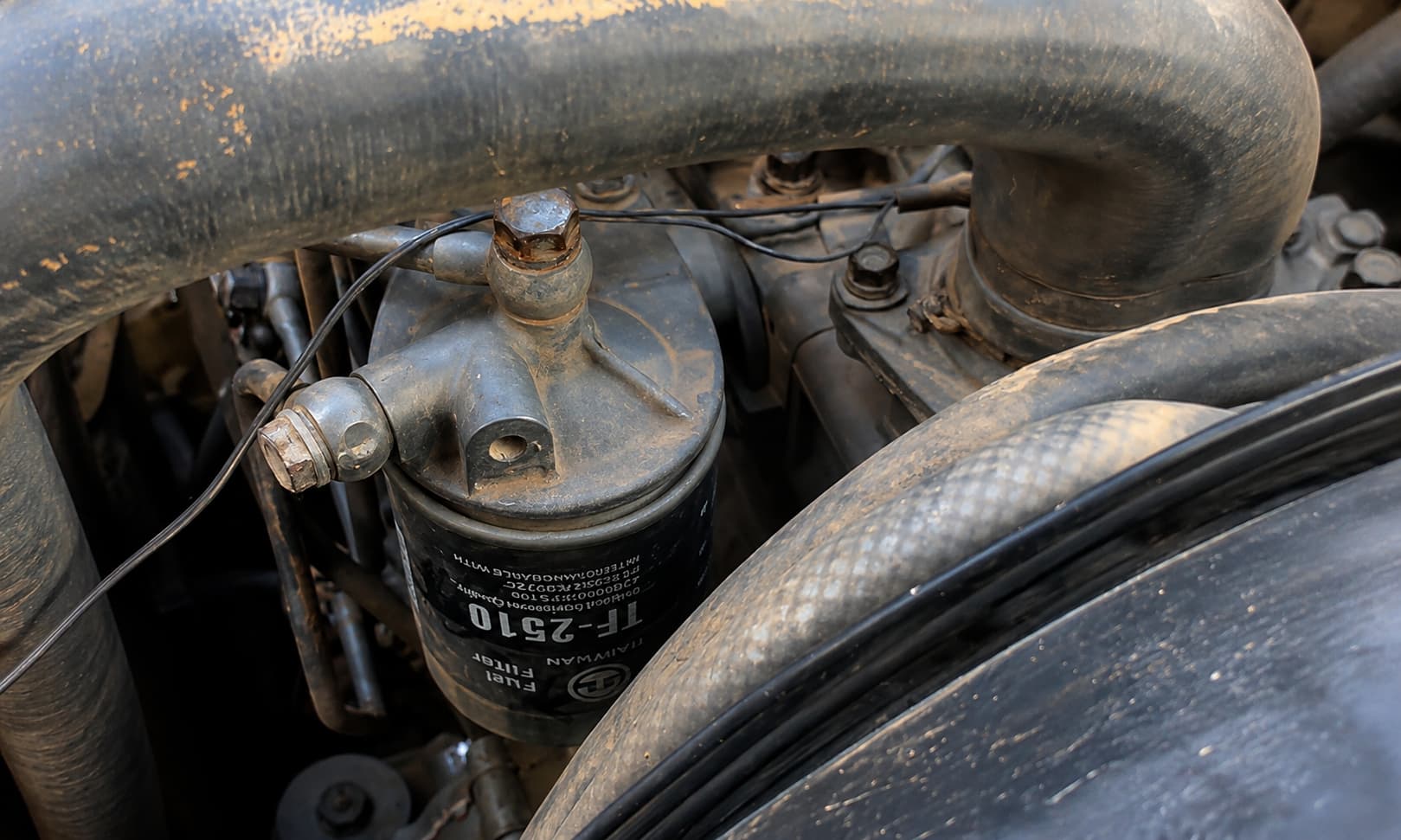
The fuel filtration system ensures a clean diesel supply to the combustion system.
It generally includes two or multiple stages of filtration.
Function:
- Remove impurities and water from diesel
- Protect fuel injectors and the combustion system
- Ensure stable engine operation
Multi-stage filtration improves fuel cleanliness before combustion.
Hydraulic System Filtration (Core System in Excavators)
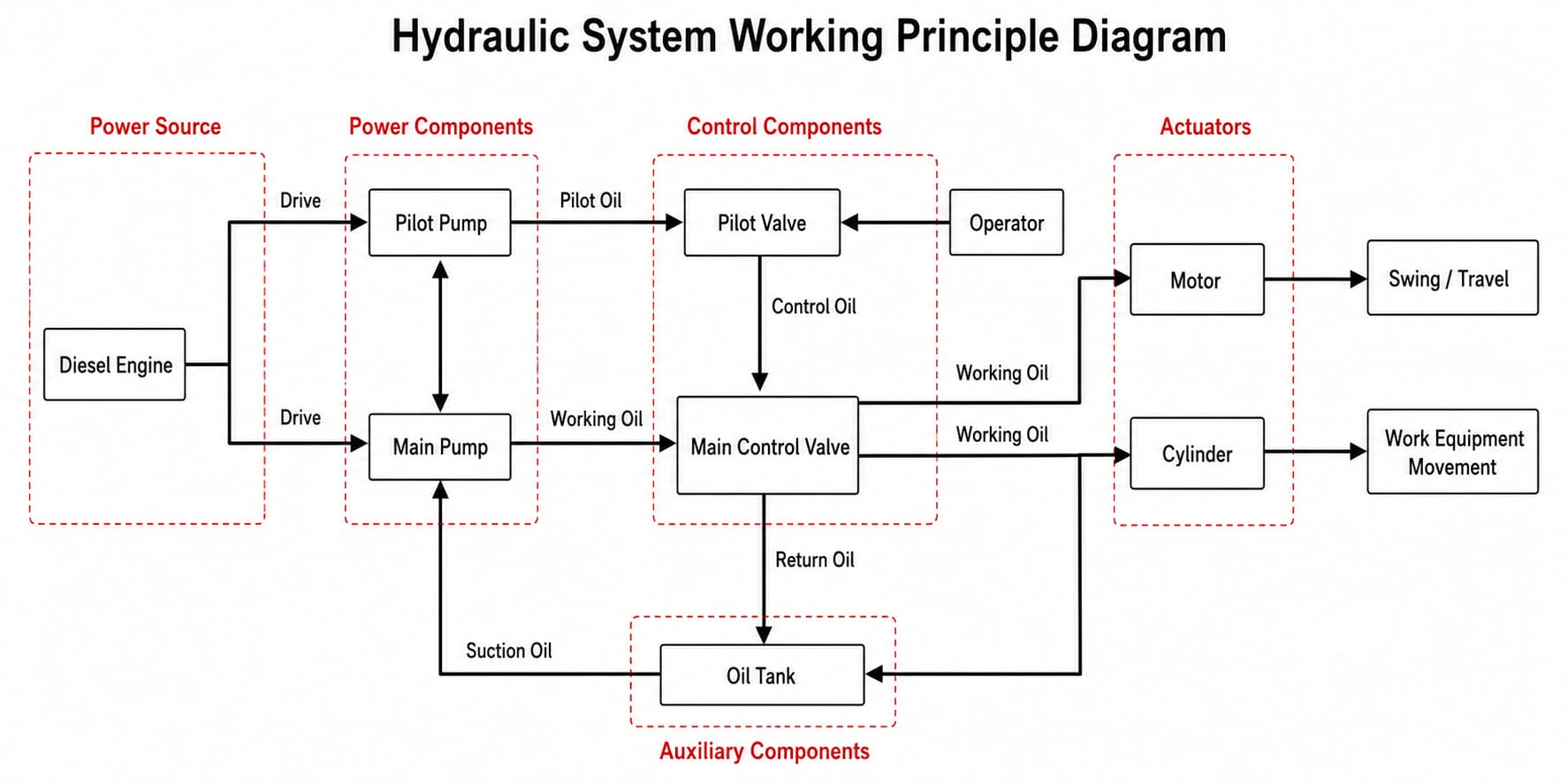
The hydraulic system uses multiple filtration points, each with a specific function:
Pilot Filter (Hydraulic Pilot Oil Filter)

The hydraulic pilot filter provides clean oil for the pilot control circuit.
It ensures smooth and accurate control signals for the joystick and pilot-operated valves.
If contaminated:
- Control response becomes slow
- The hydraulic operation becomes unstable
Return Oil Filter (Hydraulic Return Filter)

The return filter is installed on the upper part of the hydraulic oil tank return line.
Its function is to filter oil returning from hydraulic components, such as:
- Cylinders
- Hydraulic motors
- Control valves
If this filter fails or is not replaced:
- Contaminants return to the tank
- Internal wear of hydraulic components increases
- System back pressure rises
- A hydraulic pump may produce abnormal noise or cavitation
- Machine movement becomes slow and weak
- The hydraulic oil temperature increases abnormally
Suction / Inlet Filter (Hydraulic Inlet Filter)
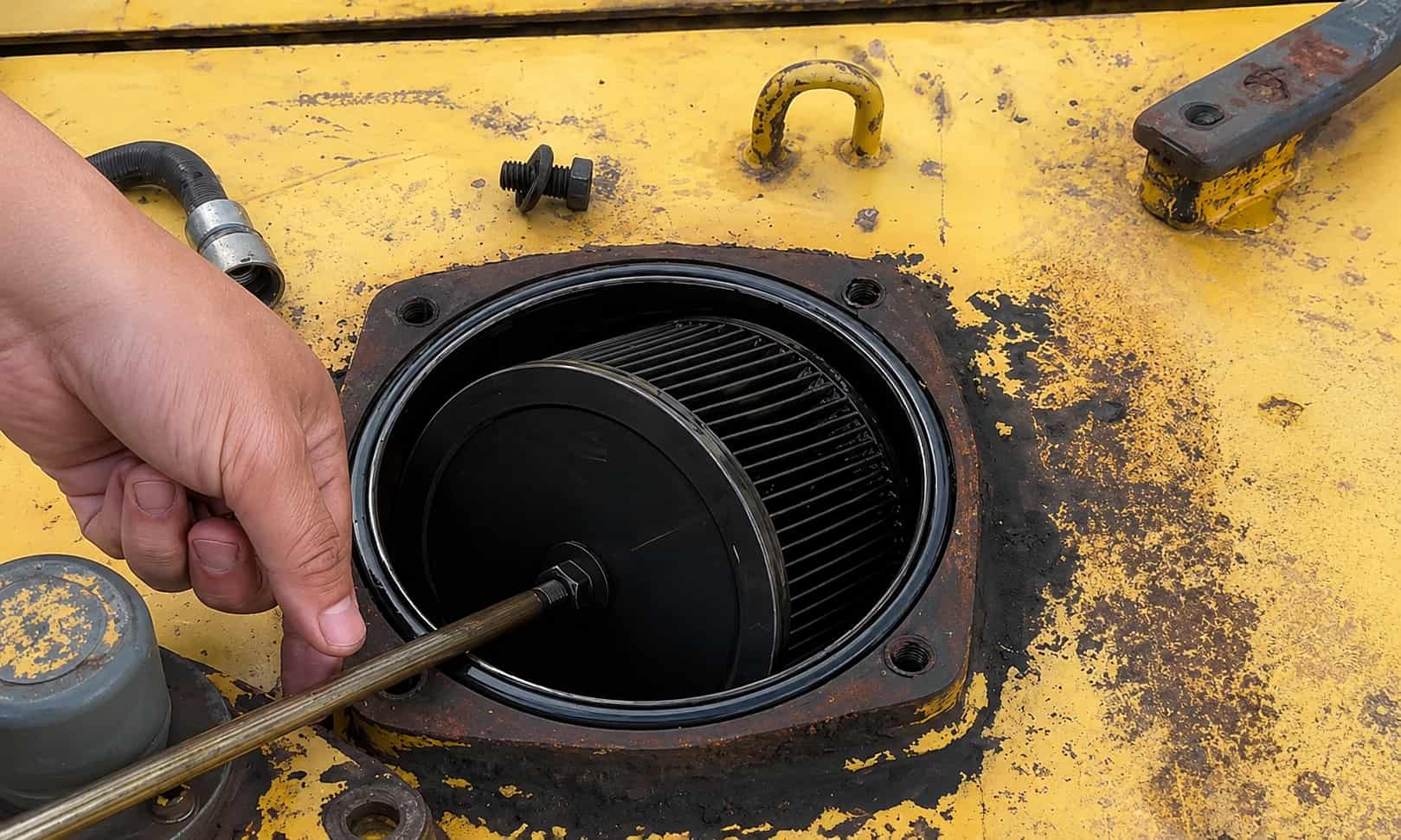
The inlet filter supplies clean hydraulic oil to the hydraulic pump.
Its role is critical because it protects the hydraulic pump from direct contamination intake.
The hydraulic system contains multiple filtration points, each protecting a different stage of oil circulation.
Maintenance Cycle for Hydraulic Filters
- General working conditions: 500 working hours
- If using a breaker (hydraulic hammer): 100–300 working hours
Breaker operation significantly increases contamination and wear particles, therefore shortening the maintenance cycle.
Breather Filter (Oil Tank Air Protection)
The breather filter is installed on the top of the hydraulic oil tank.

Function:
- Prevent dust and external particles from entering the oil tank
- Allow clean air exchange during oil level changes
- Maintain internal tank pressure balance
A blocked breather filter can introduce contamination even if internal filters are in good condition.
System Maintenance Insight
Hydraulic system performance depends heavily on oil cleanliness.
Among all filters, hydraulic return filters and pilot filters are often the most critical but frequently ignored.
Once filtration efficiency decreases:
- Contaminants circulate continuously in the system
- Wear particles accumulate in hydraulic oil
- System pressure and temperature become unstable
- Hydraulic components experience accelerated wear
Filter Replacement Strategy (Key Summary)
- Return filter: 500 hours (or 100–300 hours with breaker usage)
- Pilot filter: 500–1000 hours
- Air filter: dependent on the environment and dust level
- Fuel filter: multi-stage system, replace according to condition
- Oil filter: replace with engine oil maintenance cycle
- Breather filter: regular inspection and replacement if blocked
FAQ
What is the most important filter in an excavator hydraulic system?
The hydraulic return filter plays a critical role in controlling contamination returning to the hydraulic oil tank. It helps maintain system cleanliness and stable hydraulic performance.
Why does an excavator hydraulic system become weak or slow?
In most cases, hydraulic system weakness is caused by clogged return filters or increased back pressure, which reduces pump efficiency and affects overall machine movement.
What is the replacement interval for hydraulic return filters?
The typical replacement interval is around 500 working hours. When using a hydraulic breaker (hammer), the interval should be reduced to 100–300 working hours due to higher contamination levels.
What happens if hydraulic filters are not replaced on time?
Contamination builds up in the system, leading to increased back pressure, hydraulic pump noise, overheating, reduced machine efficiency, and accelerated component wear.
Why does breaker (hammer) operation shorten filter life?
Breaker operation generates higher levels of metal particles and system stress, which increases contamination and reduces hydraulic filter lifespan significantly.
Can all excavator filters be replaced at the same time?
Not always. However, hydraulic return filters, pilot filters, and related hydraulic system filters are often replaced together during scheduled maintenance to ensure system cleanliness and stability.
Conclusion
Excavator filter systems are not independent components, but a complete contamination control network covering air intake, fuel system, engine lubrication, and hydraulic circulation.
Among them, hydraulic return filtration plays a key role in preventing system contamination cycles and maintaining hydraulic stability.
Proper maintenance intervals—especially under heavy-duty conditions such as breaker usage—are essential to prevent system failure and extend machine lifespan.