Metal Mesh Rolling Process for Industrial Filter Elements
This page shows how metal mesh is rolled into cylindrical support structures for industrial filter element production. Depending on the filter size and production requirement, we use different mesh rolling methods for smaller support tubes and larger automatic cutting-and-rolling production.
Process Overview
What Is Metal Mesh Rolling?
Metal mesh rolling is the process of forming flat perforated metal mesh or woven mesh into a cylindrical support structure. In industrial filter elements, the rolled mesh can be used as an inner support tube, outer protection layer, or reinforcement structure depending on the filter design.
The mesh diameter, rolling width, and material type are usually adjusted according to the filter element size, support requirement, and later assembly process. After rolling, the mesh cylinder is normally welded to keep the structure stable before media pack assembly and end cap bonding.
Workshop Process
Two Mesh Rolling Methods Used in Our Workshop
Different filter support tubes may require different mesh rolling methods. Depending on the filter diameter, mesh width, order quantity, and production requirement, we use both small mesh rolling equipment and automatic cutting-and-rolling equipment.
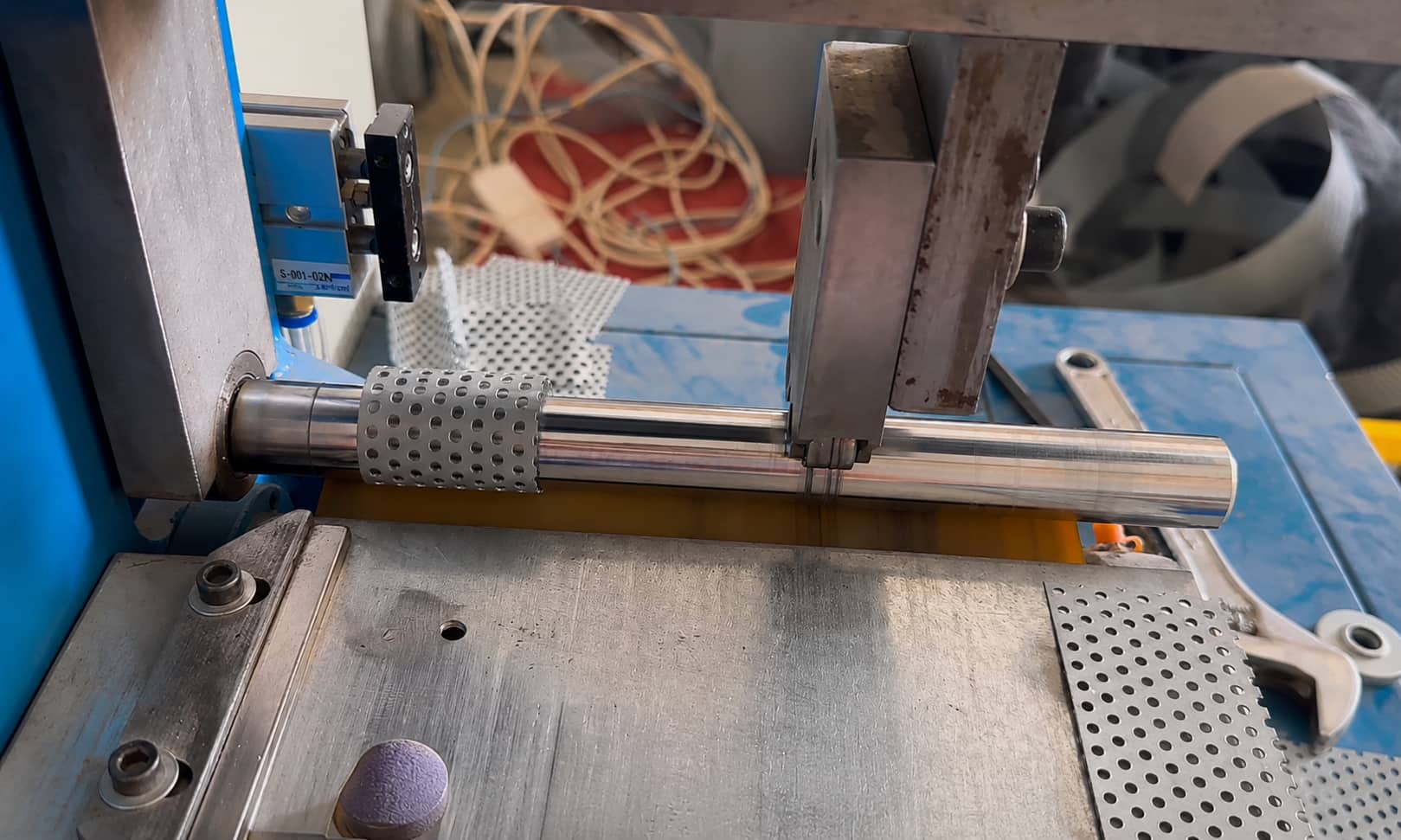
Small Mesh Rolling Machine for Smaller Filter Support Tubes
For smaller filter elements, we use a compact mesh rolling machine with manual assistance. The operator positions the cut metal mesh on the rolling shaft and helps guide the mesh into a cylindrical support tube.
This method is suitable for smaller diameters, sample production, small-batch orders, and flexible filter support tube requirements.
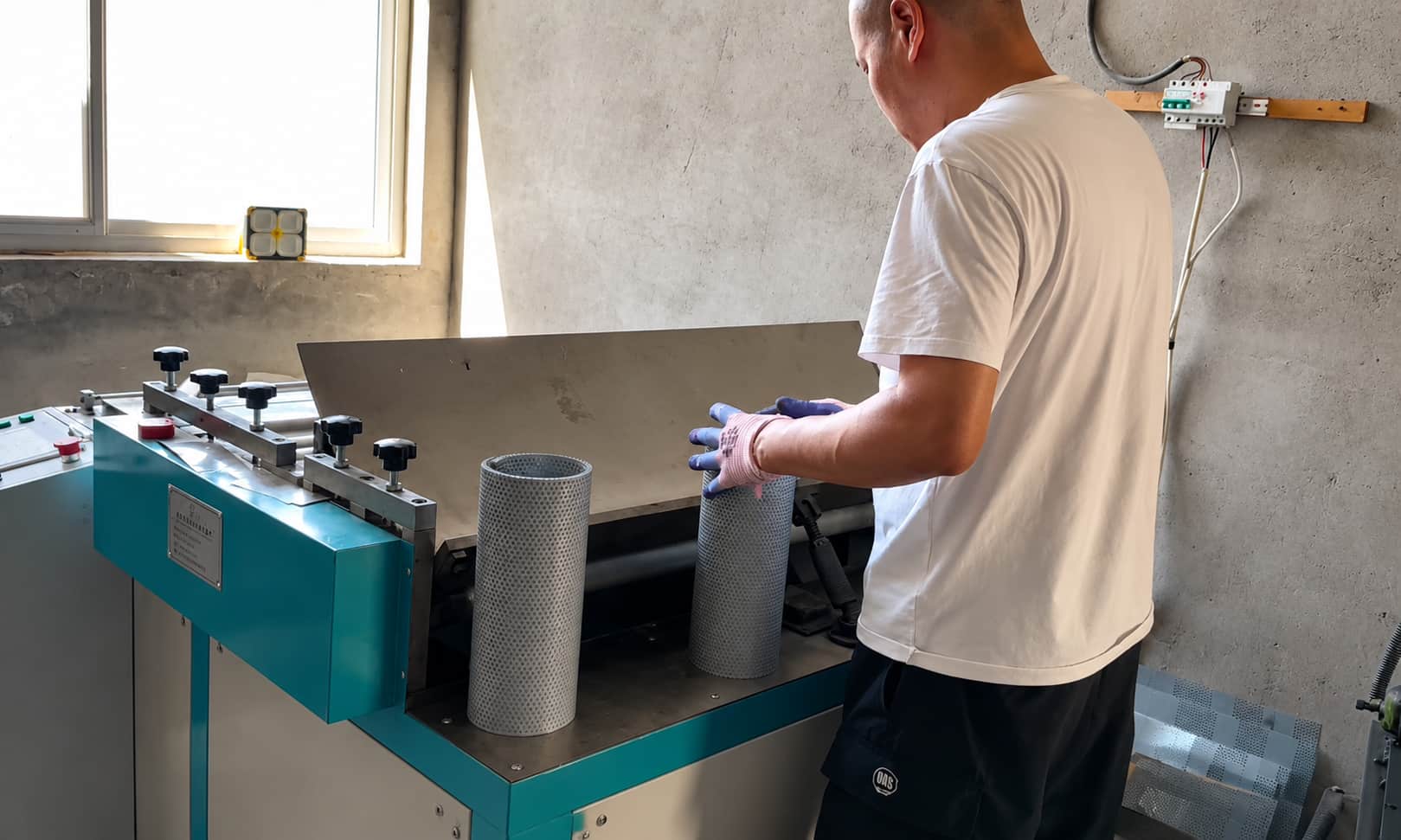
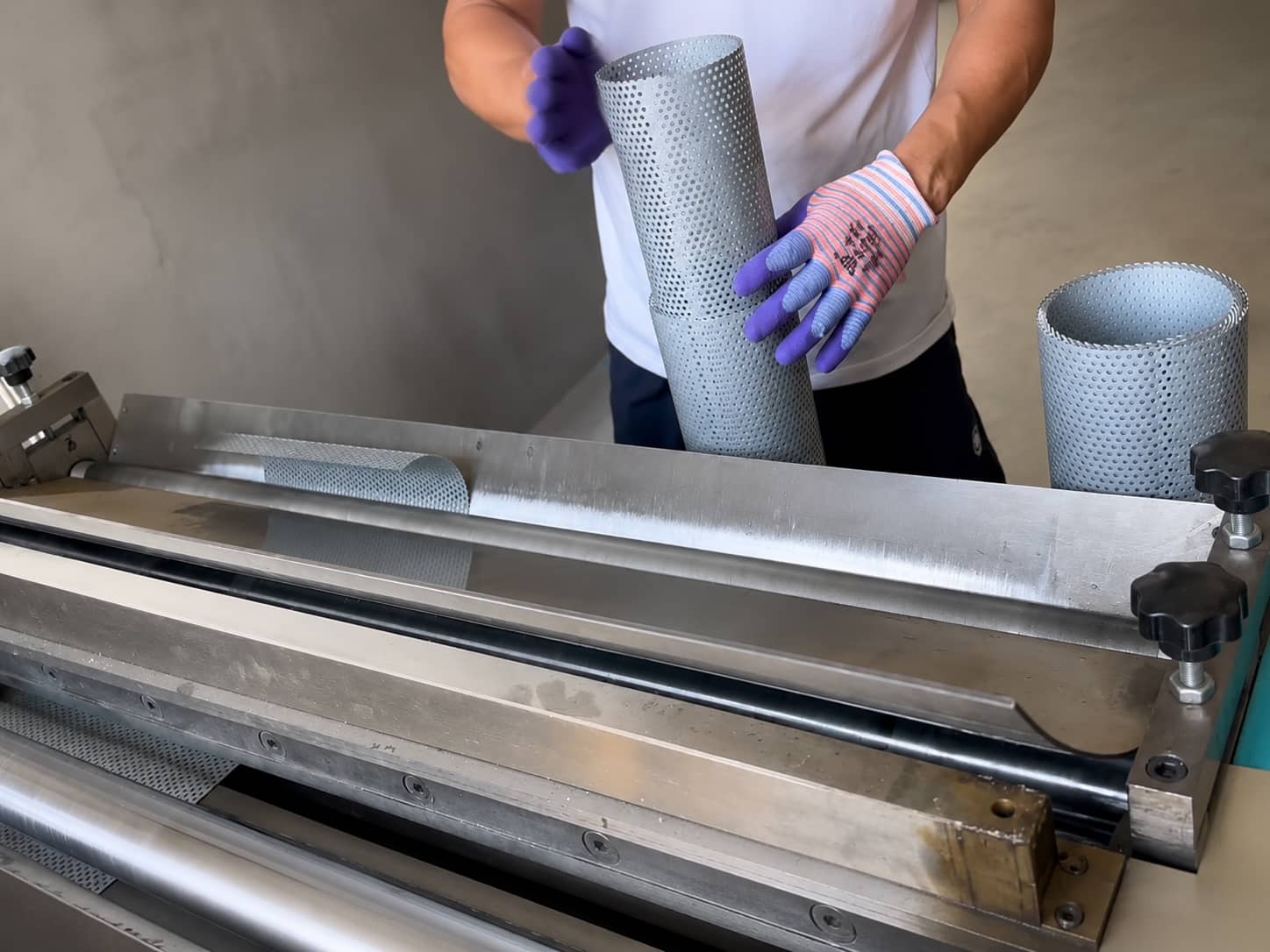
Automatic Cutting and Rolling Machine for Larger Mesh Structures
For larger filter elements or batch production, we use an automatic cutting and rolling machine. This equipment can process flat metal mesh through feeding, cutting, sectioning, and rolling.
This method helps produce larger cylindrical mesh structures with more consistent width and diameter control before welding and filter assembly.
Filter Structure Support
How Mesh Rolling Supports Filter Element Production
Rolled metal mesh is an important structural part in many industrial filter elements. It helps support the pleated media, protect the filter body, and prepare the filter element for welding, assembly, and end cap bonding.
Inner Support Tube Forming
Rolled metal mesh can be used as an inner support tube. It helps support the pleated filter media from the inside and keeps the flow channel stable during operation.
Outer Protection Mesh Forming
Some filter elements also require an outer protection mesh. The rolled outer mesh helps protect the pleated media and improve the overall filter structure.
Preparation Before Welding
After the mesh is rolled into a cylindrical shape, the seam is usually welded to keep the support tube stable before later filter assembly.
Size Matching for Custom Filters
Mesh diameter, rolling width, and material type can be adjusted according to the filter element size, structure, and custom production requirement.
Machine Capability
Automatic Mesh Rolling Machine Capability
For larger or batch filter support tube production, the automatic cutting and rolling machine helps process flat metal mesh into cylindrical structures with more consistent width and diameter control.
| Production Capacity | 25 pcs/min, based on Ø80 mm |
|---|---|
| Central Tube Diameter | Minimum Ø80 mm |
| Effective Rolling Width | ≤1300 mm |
| Cutting Blade Quantity | 4 pcs |
| Cutting Width | ≤1300 mm |
| Power | 1.5 kW |
| Power Voltage | 380V three-phase |
| Working Pressure | 6 MPa |
| Suitable Materials | Metal round hole mesh, diamond mesh |
Related Process and Custom Filter Support
Metal mesh rolling is one part of the industrial filter element production process. You can also review related production steps, material options, and custom dimension support before starting a sample or batch filter order.
View the full process from media pleating and cutting to mesh rolling, welding, assembly, glue application, and end cap bonding.
See how filter media is pleated and automatically cut before it is assembled with metal mesh support structures.
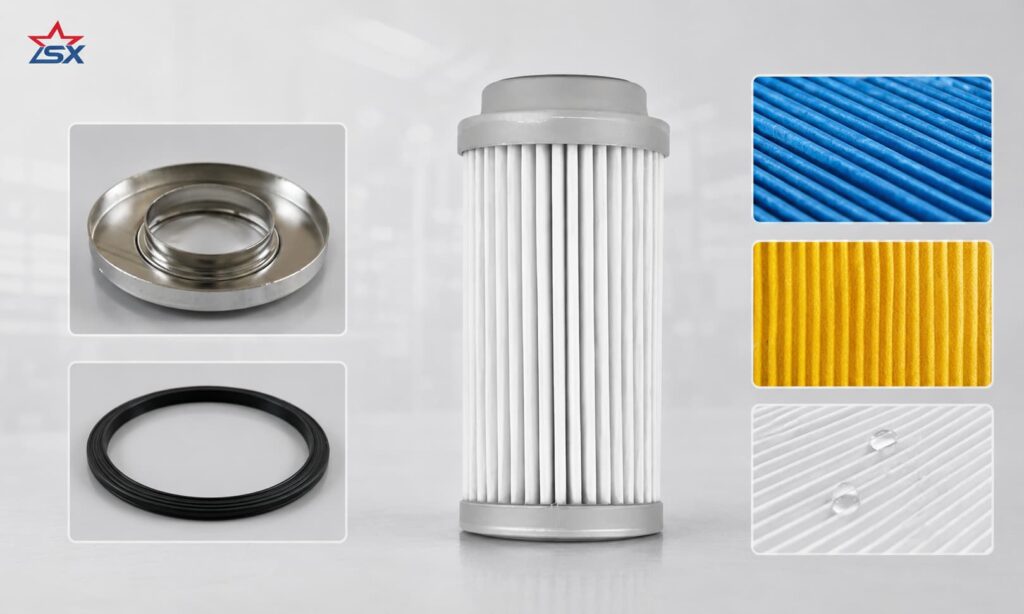
Review common filter media, metal mesh, end caps, and sealing materials used for different industrial filter element applications.