Metal Mesh Welding Process for Industrial Filter Support Tubes
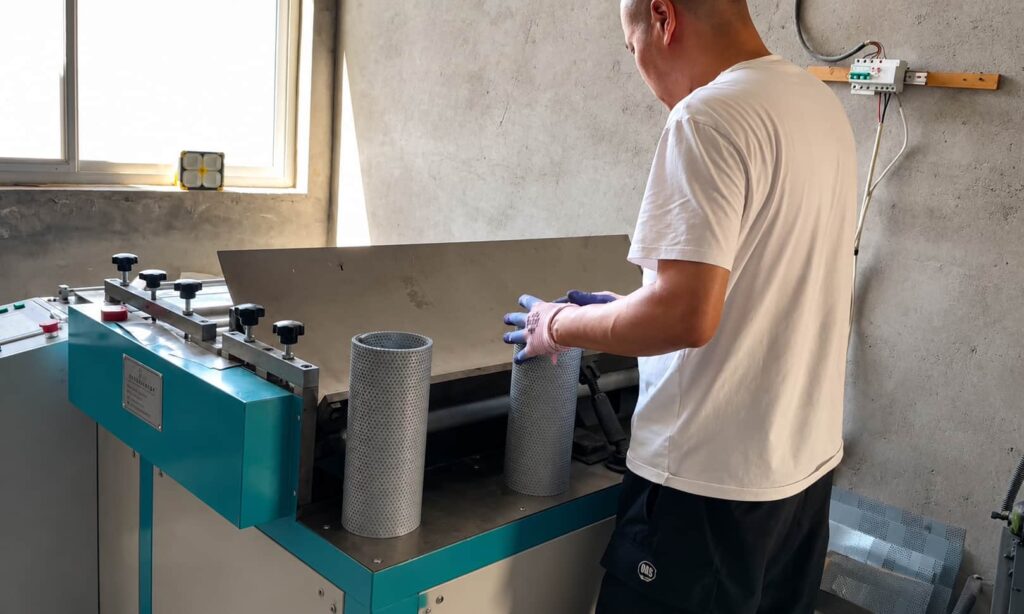
This page shows how rolled metal mesh is welded into a stable cylindrical structure for industrial filter element production. After mesh rolling, the welded seam helps the support tube maintain its shape before media assembly, end cap bonding, and final filter element production.
Process Overview
What Is Mesh Welding in Filter Element Production?
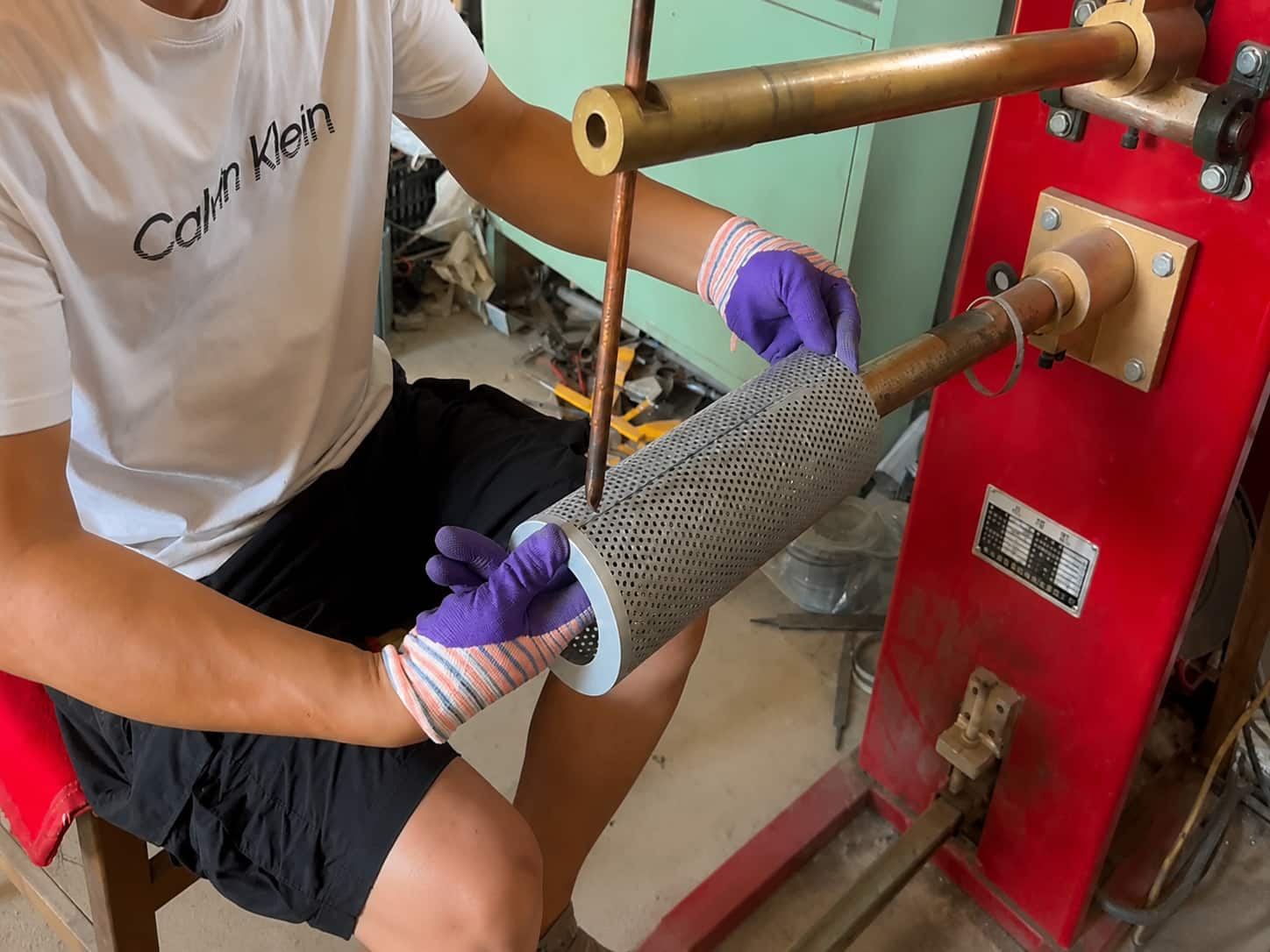
Mesh welding is the process of joining the seam of rolled metal mesh after it has been formed into a cylindrical shape. This step helps the support tube keep its round structure before it is assembled with the pleated filter media.
In industrial filter elements, the welded mesh structure can be used as an inner support tube, outer protection mesh, or reinforcement layer depending on the filter design. A stable welded seam helps prepare the mesh cylinder for later media assembly, end cap bonding, and final filter element production.
After Mesh Rolling
Why Mesh Welding Is Needed After Rolling
After metal mesh is rolled into a cylindrical shape, the seam needs to be fixed before the mesh structure can be used in filter element assembly. Welding helps keep the support tube stable during the next production steps.
Keeps the Cylindrical Shape Stable
Welding fixes the rolled mesh seam and helps the support tube keep its round shape during handling, assembly, and later filter use.
Supports Media Pack Assembly
A stable welded mesh tube makes it easier to assemble the pleated filter media with the support structure before final bonding.
Used for Inner and Outer Mesh
Depending on the filter design, welded mesh can be used as an inner support tube, outer protection layer, or structural reinforcement part.
Prepares for End Cap Bonding
A fixed mesh structure helps keep the filter body aligned before glue application, end cap bonding, and final filter element completion.
Related Process and Custom Filter Support
Pleating is only one step in industrial filter element production. You can also review the full production process, confirm custom filter dimensions, or check common filter element materials before starting a sample or batch order.
View the full process from media pleating and cutting to mesh rolling, welding, assembly, glue application, and end cap bonding.
See how flat metal mesh is rolled into cylindrical support tubes before the welding step.
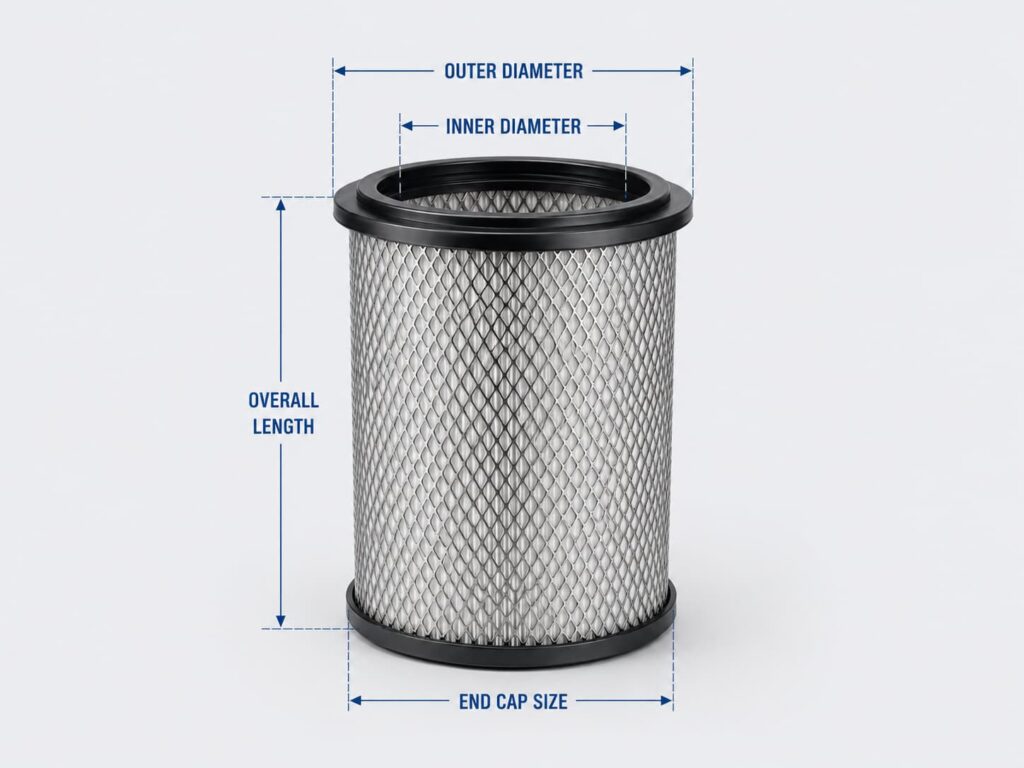
Check which dimensions should be confirmed before custom filter production, including height, outer diameter, inner diameter, sealing position, and end cap structure.