Engine oil filters are important components in engine lubrication systems. Their main function is to remove contaminants from engine oil and help protect critical engine components from premature wear.
During engine operation, friction between moving parts can generate small metal particles, carbon deposits, and other contaminants. If these particles continue circulating with the oil, they may accelerate component wear and affect engine reliability.
For filter distributors, aftermarket suppliers, and equipment maintenance companies, understanding engine oil filter structure, filtration performance, and selection factors helps identify suitable replacement filters for different applications.
What Does an Engine Oil Filter Do?
Engine oil continuously circulates through the lubrication system to reduce friction and remove heat from internal engine components. During this process, the oil can collect various contaminants generated from engine operation.
An engine oil filter removes these particles before the oil returns to critical components, helping maintain cleaner lubrication and stable engine performance.
Without effective filtration, contaminants may enter areas such as:
- bearings
- crankshafts
- pistons
- lubrication passages
Over time, excessive contamination can increase wear, reduce component life, and affect overall engine reliability.
How Does an Engine Oil Filter Work?
Most engine oil filters use a pleated filter element inside a protective housing. The pleated structure increases the filtration area while maintaining a compact design, allowing the filter to capture contaminants while maintaining sufficient oil flow.
A typical engine oil filter consists of several important components.
Filter Media
The filter media is the main filtration component responsible for capturing contaminants from engine oil.
Pleated filter media is widely used because the folded structure provides a larger filtration surface area within a limited space. The performance of the filter depends on factors such as filtration efficiency, dirt-holding capacity, pressure resistance, and durability.
Different filter media designs are selected according to engine requirements and operating conditions. Standard applications usually focus on cost-effective and reliable filtration, while heavy-duty or demanding applications may require higher-performance media with improved strength and longer service life.
Center Tube
The center tube provides structural support for the filter element.
During operation, engine oil passes through the filter under pressure. Without proper support, the filter media may deform or collapse, reducing filtration performance.
The centre tube helps maintain the shape of the filter element and ensures stable oil flow through the filtration area.
Anti-Drainback Valve
The anti-drainback valve prevents oil from flowing back into the oil pan after the engine stops.
By keeping oil inside the filter and lubrication passages, it helps provide faster lubrication during engine startup and reduces the risk of dry friction between moving components.
Bypass Valve
The bypass valve is a safety feature designed to maintain oil circulation when the filter becomes heavily loaded with contaminants.
If the filter element becomes restricted and oil cannot flow normally, the bypass valve allows oil to continue reaching the engine components.
This design prioritises continuous lubrication protection, helping prevent severe damage caused by insufficient oil flow.
Common Types of Engine Oil Filters
Engine oil filters are available in different designs depending on engine structure, maintenance requirements, and application conditions.
| Filter Type | Features | Common Applications |
|---|---|---|
| Spin-On Oil Filter | Filter element and housing are integrated into one unit, providing convenient replacement and maintenance. | Trucks, construction machinery, diesel engines |
| Cartridge Oil Filter | Only the filter element is replaced while the housing remains installed, reducing replacement waste and maintenance costs. | Modern engines and equipment |
| Custom Oil Filter Element | Designed according to specific equipment requirements, dimensions, and operating conditions. | OEM and aftermarket replacement applications |
For heavy-duty equipment and industrial applications, replacement filters are often selected based on the original filter specifications, equipment model, and operating environment.
How Do Filter Materials Affect Oil Filter Performance?
Filter media selection has a direct impact on filtration performance, service life, and operating reliability.
Different applications require different balances between filtration efficiency, oil flow resistance, durability, and cost.
For general engine applications, commonly used filter media provide reliable contamination removal while maintaining reasonable operating costs. For heavy-duty engines or equipment working in harsh environments, higher-performance filter materials may be selected to improve durability, contamination capacity, and long-term filtration stability.
When selecting engine oil filters, the filter material should match the engine requirements, working conditions, and expected maintenance interval rather than focusing only on filtration precision.
How to Select the Right Engine Oil Filter?
Selecting the correct replacement engine oil filter requires more than checking the external appearance. The filter should match the engine specifications and operating requirements.
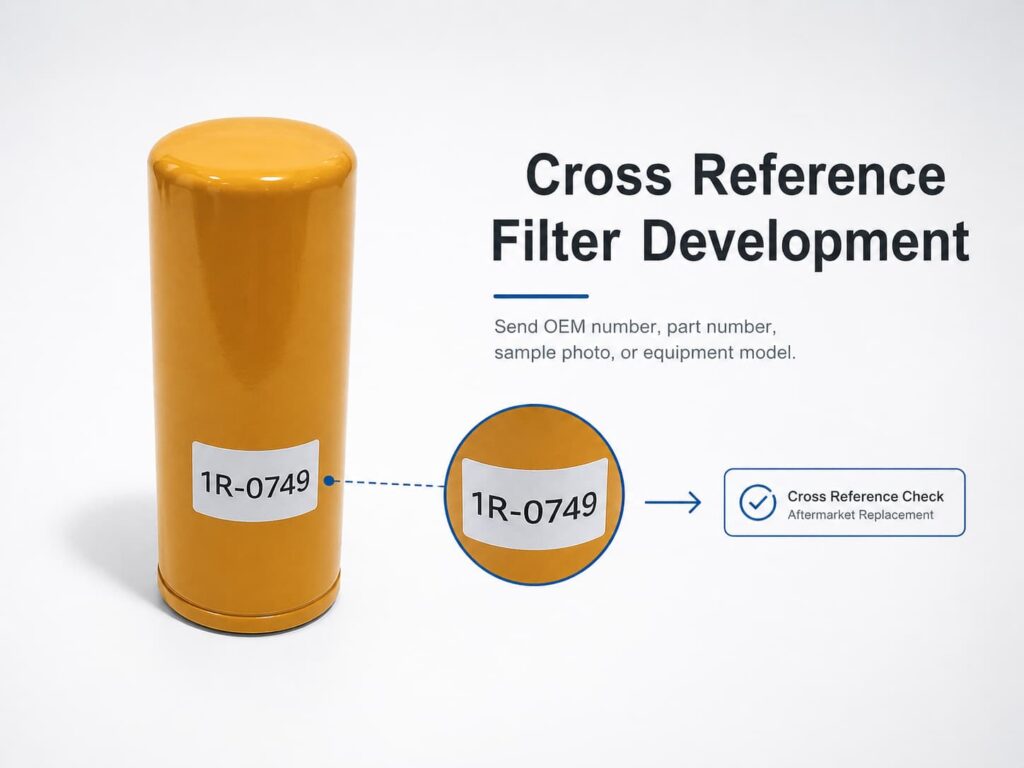
Confirm OEM Part Number
The OEM part number is one of the most reliable references when identifying a replacement oil filter.
Matching the correct part number helps avoid problems caused by incorrect dimensions, sealing structures, or filtration performance.
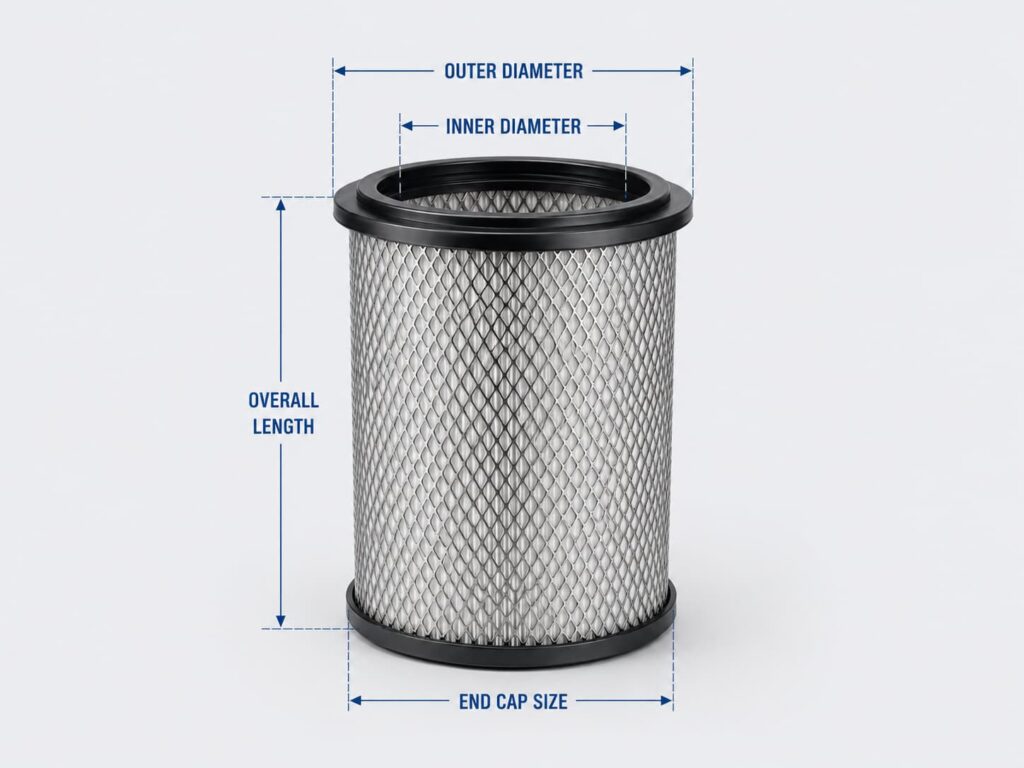
Check Filter Dimensions
Important dimensions include:
- outer diameter
- inner diameter
- overall height
Even small differences in dimensions may affect installation and sealing performance.
Verify Connection and Sealing Details
For spin-on oil filters, buyers should confirm:
- thread specification
- gasket size
- sealing structure
These details are critical for proper installation and preventing oil leakage.
Consider Application Requirements
The suitable oil filter depends on:
- engine model
- equipment type
- operating environment
- filtration requirements
- maintenance conditions
For replacement filter distributors and suppliers, understanding the application is essential for providing the correct filter solution.
When Should an Engine Oil Filter Be Replaced?
Engine oil filters are normally replaced together with engine oil during scheduled maintenance.
The actual replacement interval depends on several factors, including:
- engine design
- oil quality
- operating conditions
- manufacturer’s recommendations
For example, engines operating in dusty environments, heavy-load conditions, or frequent start-stop operations may require more frequent maintenance compared with standard applications.
Replacing the oil filter together with engine oil helps prevent old contaminants from remaining in the lubrication system.
What Happens If an Oil Filter Is Not Replaced?
A clogged or worn oil filter may gradually lose its filtration performance.
Possible effects include:
- reduced oil flow efficiency
- increased contamination in the lubrication system
- accelerated wear of engine components
In severe conditions, excessive contamination may affect engine reliability and increase maintenance costs.
Regular replacement of the correct oil filter helps maintain stable filtration performance and protect engine components.
Frequently Asked Questions
Can an engine oil filter be cleaned and reused?
Most engine oil filters are designed as replacement components rather than reusable filters. Cleaning methods usually cannot restore the original filtration performance, contamination capacity, or structural strength of the filter element.
Are more expensive oil filters always better?
Not necessarily. The suitable oil filter depends on engine specifications, operating conditions, filtration requirements, and expected service performance. A properly matched filter is usually more important than simply choosing the most expensive option.
How can I find the correct replacement engine oil filter?
The correct replacement filter should be identified by checking the OEM part number, engine model, filter dimensions, thread specification, and sealing requirements before ordering.
What factors affect engine oil filter performance?
Engine oil filter performance is affected by filter media design, filtration efficiency, dirt-holding capacity, structural strength, and compatibility with the engine lubrication system.