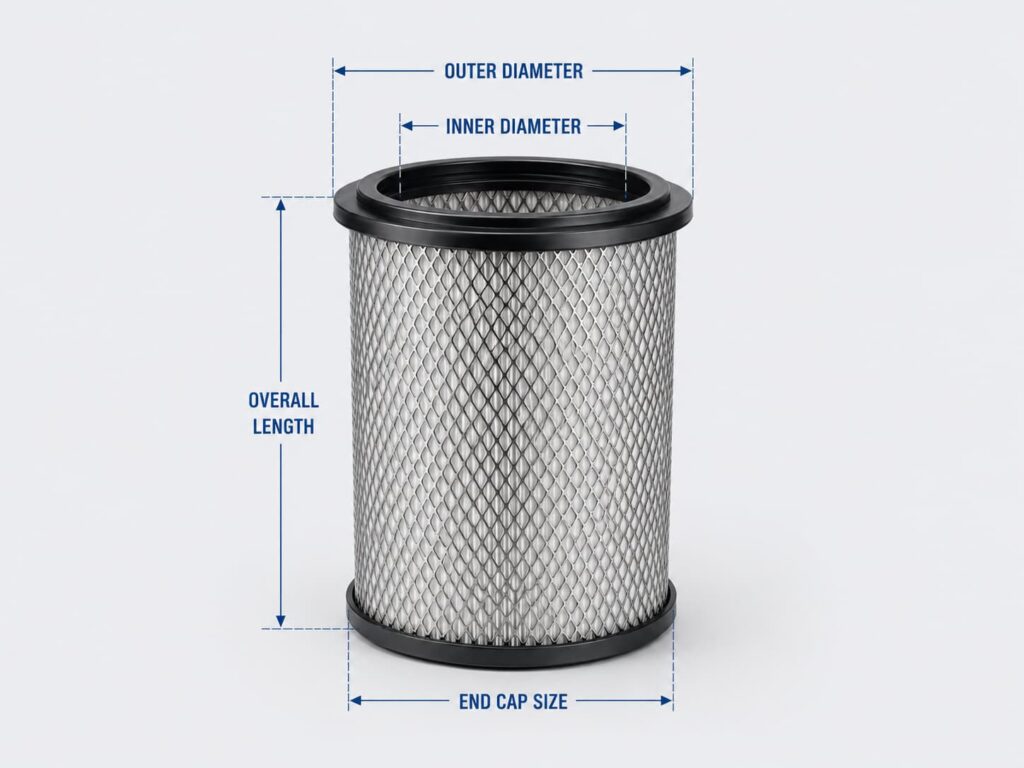
A car engine air filter is usually replaced every 10,000–15,000 km, but this interval should change according to driving conditions. Vehicles used on dusty roads, construction areas, dry regions, or heavy-traffic environments may need air filter replacement around 5,000–8,000 km, while vehicles driven mainly in cleaner city conditions may use the filter longer if the filter remains clean and structurally stable.
The engine air filter works like a protective mask for the engine. It allows clean air to enter the intake system while blocking dust, sand, pollen, and fine particles from reaching the combustion chamber. If the air filter becomes clogged, damaged, or made from unstable low-grade material, the engine may suffer from reduced airflow, weak acceleration, higher fuel consumption, and long-term wear risks.
What Does an Engine Air Filter Do in a Car?
A car engine needs both fuel and air to complete combustion. However, outside air is not clean. It may contain dust, sand, pollen, fine particles, and small road debris.
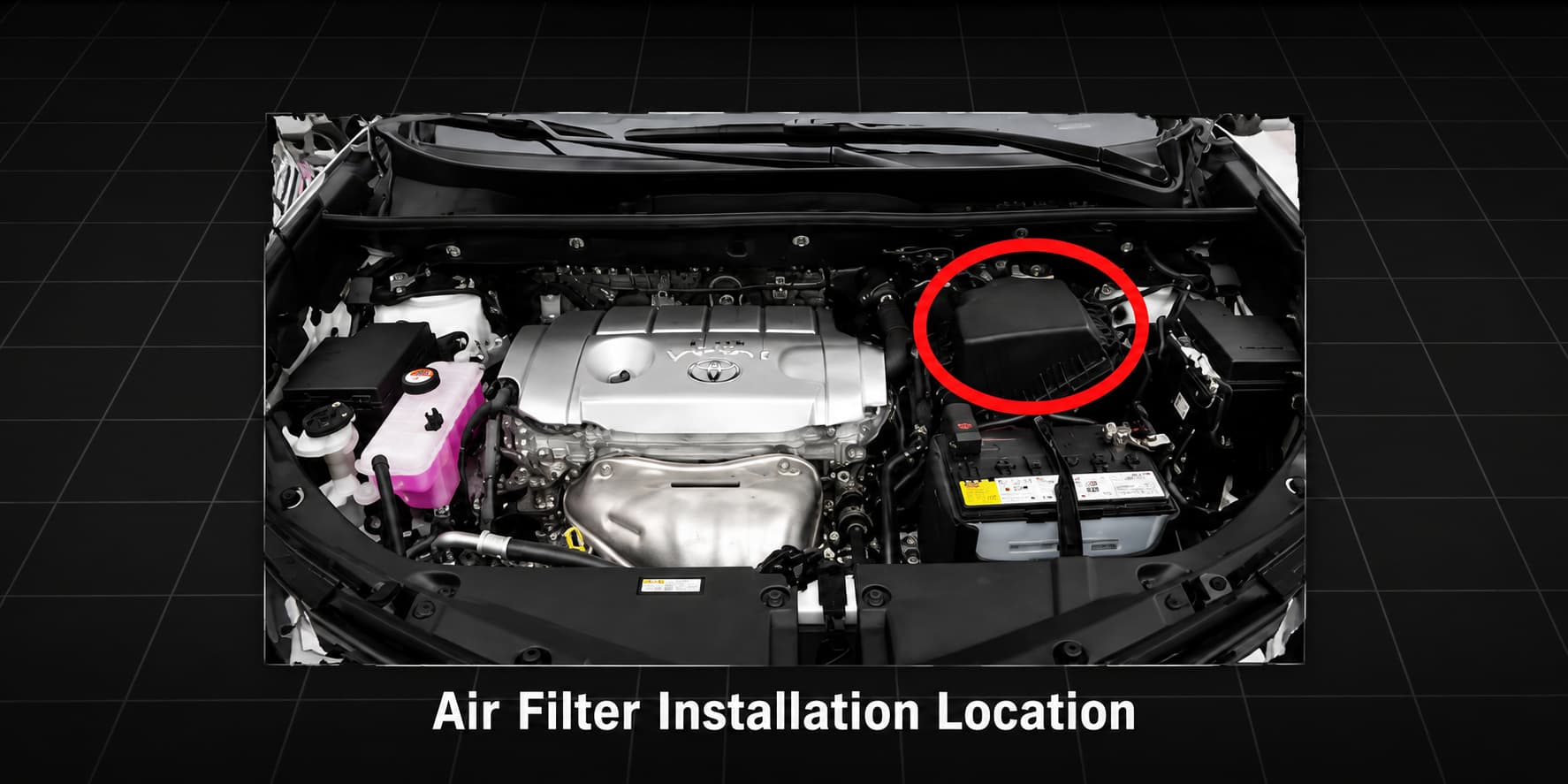
The engine air filter is installed before the intake system. Its job is simple but important: allow enough clean air to enter the engine while blocking harmful particles from reaching the combustion chamber.
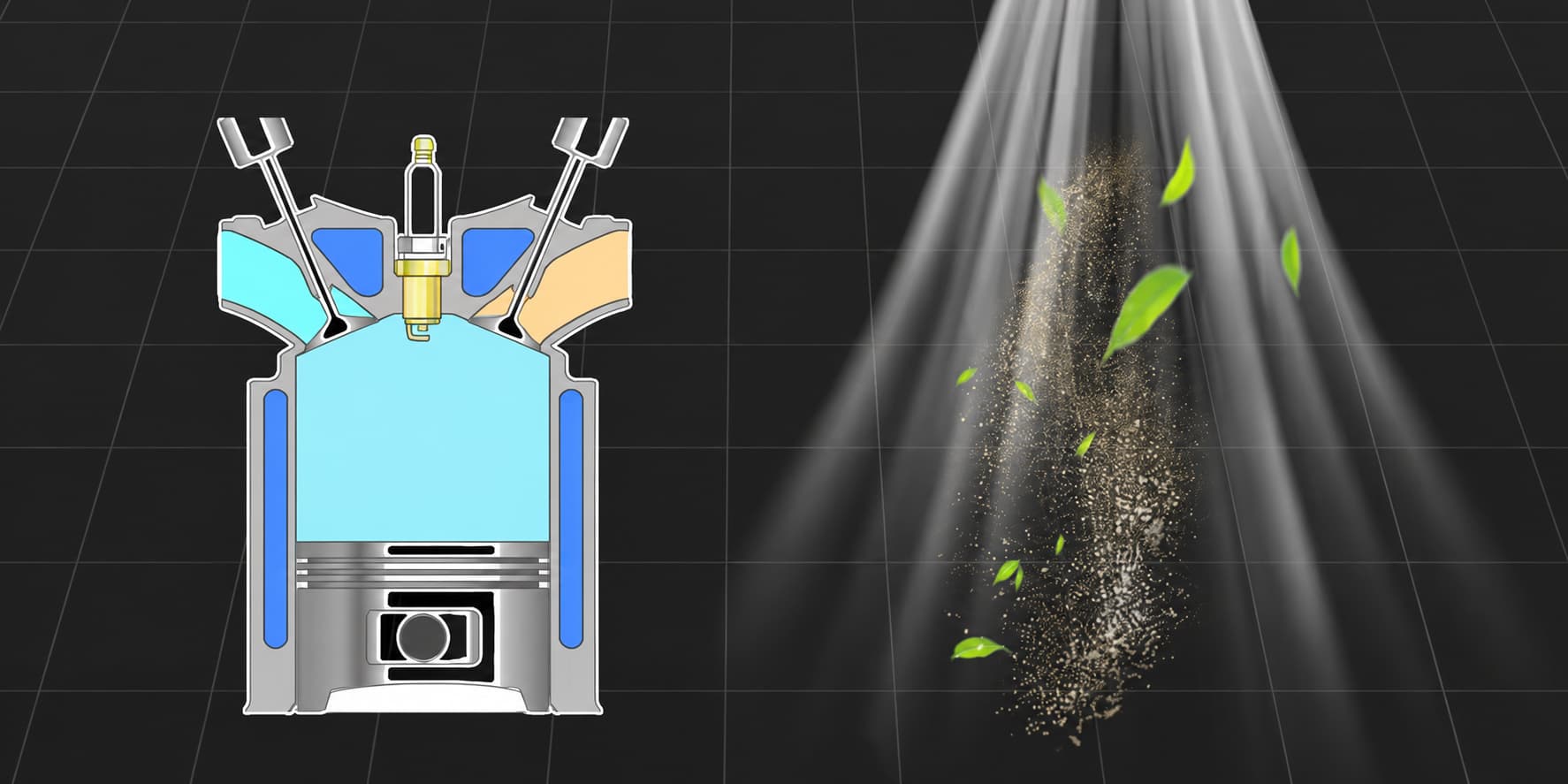
Engine Air Filter Works Like a Protective Mask for the Engine
The engine air filter works like a protective mask for the engine intake system. It does not stop airflow. Instead, it filters the air before the air mixes with fuel.
A good engine air filter should do three things:
- Block dust and sand before particles enter the engine
- Keep stable airflow so the engine can breathe properly
- Maintain filtration performance during normal driving conditions
If the filter media, sealing edge, or filter structure is poor, unfiltered air may enter the intake system. This can reduce the protective function of the air filter.
Why Fine Dust Particles Can Damage the Engine Cylinder
Fine dust may look harmless, but some particles are hard and abrasive. If dust or sand enters the cylinder, the particles can rub against the cylinder wall and piston ring during high-speed engine operation.
For the engine, these particles are not just “dirt.” They can act like abrasive material inside the combustion system.
Long-term use of a low-quality, damaged, or clogged engine air filter may affect:
- Cylinder wall protection
- Piston ring wear control
- Intake system cleanliness
- Combustion efficiency
- Engine power and fuel consumption
This is why engine air filter quality matters. The filter must not only fit the air box, but also provide stable filtration, proper airflow, and reliable sealing.
How Often Should a Car Engine Air Filter Be Replaced?
The replacement interval for a car engine air filter is not fixed for every vehicle. A useful reference range is 10,000–15,000 km, but the actual duration depends on road conditions, air quality, driving environment, and the filter’s condition.
Standard Engine Air Filter Replacement Interval: Around 10,000–15,000 km
Many vehicle manuals recommend checking or replacing the engine air filter at around 10,000–15,000 km.
This interval is usually suitable for:
- Normal city roads
- Average air quality
- Regular daily driving
- Vehicles not exposed to heavy dust or sand
However, this should be used as a general reference, not an absolute rule. The same air filter may last longer in a clean environment but clog much sooner in a dusty one.
Replace the Engine Air Filter Earlier in Dusty or Sandy Road Conditions
If the vehicle often runs in dusty or sandy environments, the engine air filter should be checked and replaced earlier.
These conditions include:
- Construction sites
- Mining areas
- Rural roads
- Unpaved roads
- Dry and sandy regions
- Heavy-duty commercial use
In these environments, inspection or replacement may be needed around 5,000–8,000 km, sometimes even sooner.
This is especially important for pickup trucks, commercial vehicles, agricultural vehicles, construction equipment, and long-distance transport vehicles. Their air filters carry a heavier dust load, so waiting too long can reduce airflow and filtration performance.
City Driving with Cleaner Air May Allow a Longer Replacement Interval
If the vehicle is mainly used in cleaner city conditions, the engine air filter may last longer. For vehicles driven on paved roads with lower dust exposure, the filter may not become clogged as quickly.
Even so, the filter should still be checked regularly. A longer replacement interval does not mean the filter can be ignored.
The best rule is:
Follow the vehicle manual, but also judge by the actual filter condition.
If the filter is dirty, clogged, damp, deformed, or damaged, replacement should not be delayed.
Signs That an Engine Air Filter Needs Replacement
A car engine air filter may need replacement when these signs appear:
- Sluggish acceleration
- Reduced engine power
- Higher fuel consumption
- Increased carbon buildup risk
- Dirty or clogged filter media
- Weak intake airflow
- Darkened or deformed filter surface
From a filter factory point of view, replacement timing should not only depend on mileage. A stable air filter should maintain proper airflow, filtration efficiency, and sealing performance during its service life. Once these functions are affected, the filter should be replaced.
What Happens If the Engine Air Filter Is Not Replaced on Time?
When the engine air filter is not replaced on time, two problems may happen: airflow becomes restricted, and filtration performance becomes unstable. Both can affect engine performance and long-term protection.
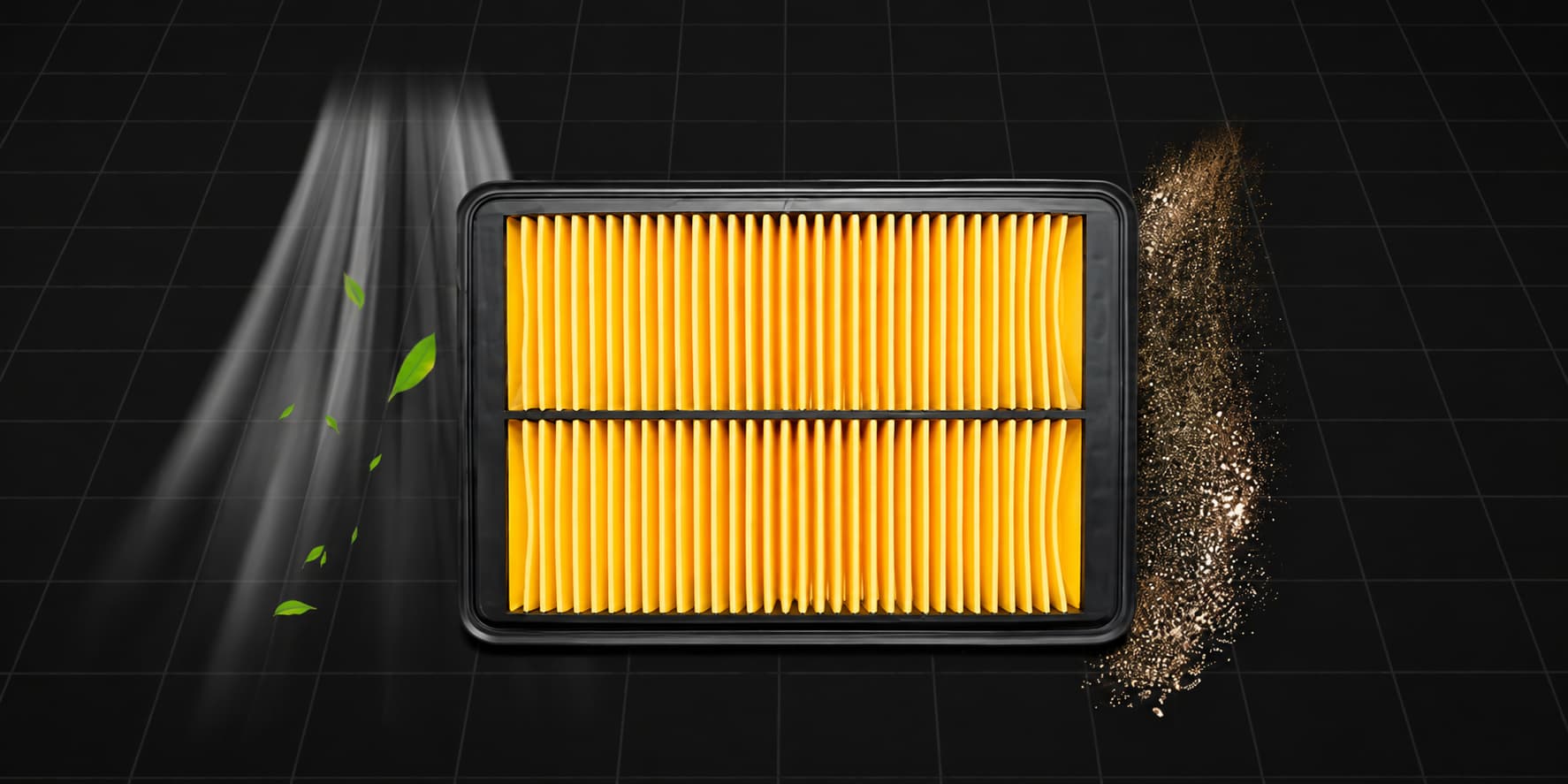
A Clogged Engine Air Filter Can Reduce Airflow
A clogged engine air filter makes it harder for air to enter the engine.
When airflow is restricted, the engine may not get enough clean air for proper fuel combustion. The driver may notice:
- Sluggish throttle response
- Weak acceleration
- Reduced engine power
- A heavier driving feeling
In this situation, the air filter is no longer only filtering air. It is also becoming a restriction in the intake system.
Dirty Air Filter May Increase Fuel Consumption and Carbon Buildup
A dirty air filter can affect the air-fuel mixture and combustion efficiency.
When the engine cannot breathe smoothly, fuel may not burn as efficiently as expected. Over time, this may lead to:
- Higher fuel consumption
- More carbon buildup risk
- Less stable engine performance
- Reduced driving efficiency
This does not mean every dirty air filter will immediately damage the engine. But if a clogged filter is used for too long, the risk of poor combustion and higher operating cost becomes greater.
Poor Filtration Can Allow Dust to Enter the Intake System
Another risk is poor filtration. If the filter media is low quality, the sealing edge is not tight, the paper media is deformed, or the pore structure becomes unstable, dust may pass through or bypass the filter.
This can allow fine particles to enter the intake system and may increase wear on:
- Cylinder walls
- Piston rings
- Intake components
- Combustion-related parts
This is why filter quality matters. A good engine air filter should not only look clean when new. It should maintain stable filtration, airflow, and sealing performance throughout its service life.
Cheap Engine Air Filters vs Quality Engine Air Filters: What Is the Real Difference?
The real difference between a cheap engine air filter and a quality engine air filter is not only the price. The key differences are usually found in the filter media, fibre structure, humidity resistance, sealing quality, airflow resistance, and long-term stability.
A low-cost filter may look similar when new, but the performance can change quickly after dust loading, moisture exposure, or long-term use.
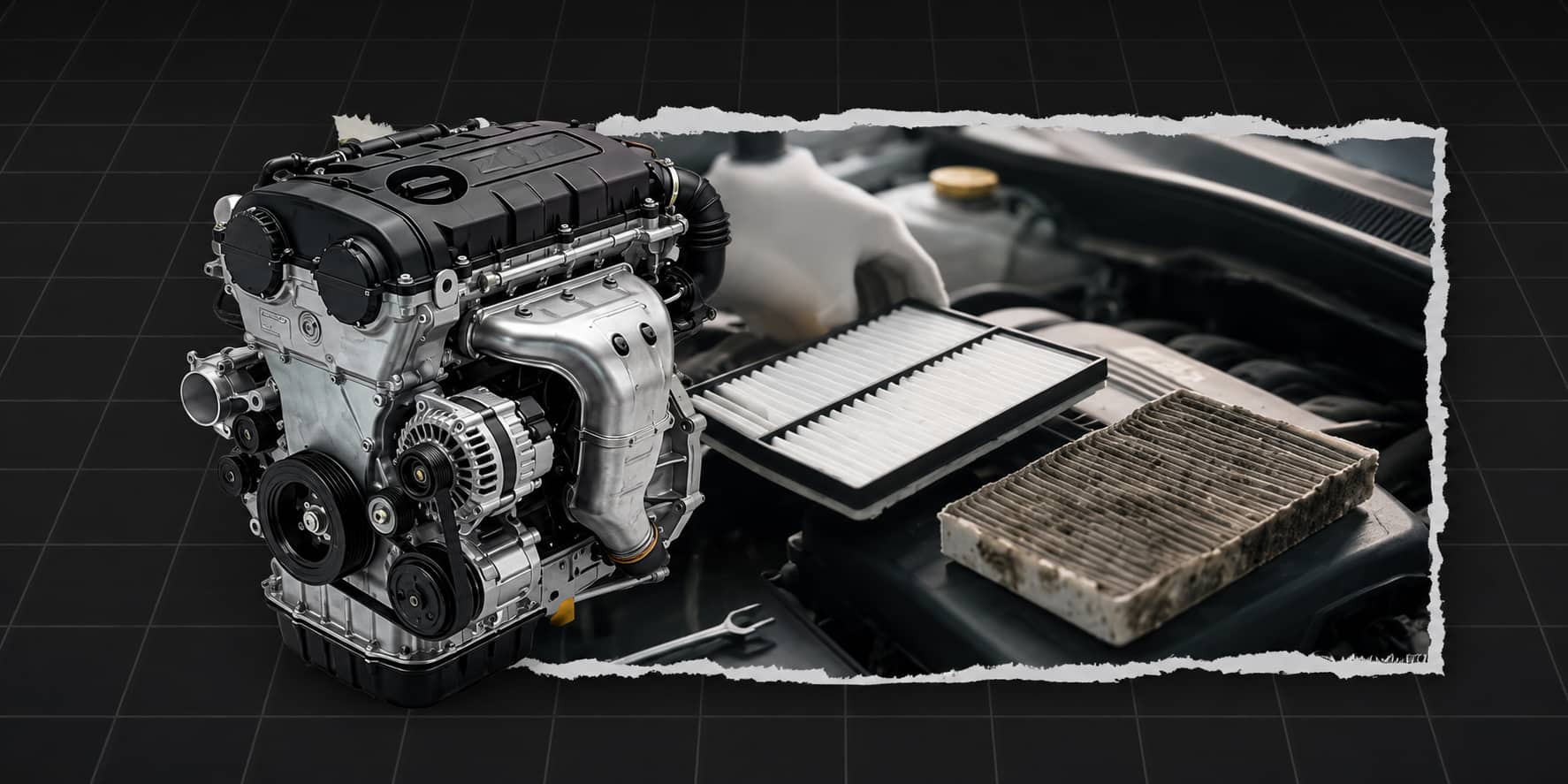
Low-Cost Engine Air Filters May Use Unstable Filter Paper
Some extremely low-cost filters may use unstable paper media, low-grade pulp, recycled paper material, or excessive fillers. In some cases, starch-like additives or heavy glue may be used to make the filter paper feel harder and easier to shape.
The problem is that this type of filter media may only perform acceptably at the beginning.
After exposure to humidity, heat, vibration, or heavy dust, unstable filter paper may:
- Soften or deform
- Lose pleat strength
- Become clogged unevenly
- Collapse under airflow pressure
- Allow dust to pass through weak areas
- Release paper dust or loose material into the intake system
This is why a very cheap air filter may seem usable at first, but its filtration performance may become unstable during real driving conditions.
High-Quality Engine Air Filters Use More Stable Filter Media
A quality engine air filter usually uses more stable filter media, such as virgin wood pulp, synthetic fibre, polyester fibre, or composite media.
Compared with low-grade paper media, higher-quality filter media usually have:
- More uniform fibre distribution
- Better filtration stability
- Lower risk of media deformation
- Better humidity resistance
- More balanced airflow performance
- Less risk of fibre shedding or loose particles
This helps the air filter maintain its structure during use. Even in humid or dusty conditions, the filter media is less likely to soften, collapse, or lose its original filtration function.
For importers, wholesalers, and repair channels, this stability is important because product quality needs to remain consistent across bulk orders.
Filter Media Quality Affects Filtration Efficiency and Airflow Resistance
A good engine air filter is not simply “the denser, the better.”
If the filter media is too loose, dust may pass through more easily. If the filter media is too dense or poorly designed, airflow resistance becomes too high, and the engine may not breathe smoothly.
A reliable engine air filter needs to balance three key points:
- Filtration efficiency — how well the filter blocks dust and fine particles
- Airflow resistance — how smoothly air can pass through the filter
- Dust holding capacity — how much dust the filter can hold before airflow is affected
From a factory point of view, this balance depends on many production details, including filter media thickness, pleat height, pleat spacing, glue line, frame strength, sealing edge, and overall fitment accuracy.
Small differences in these details can affect the final performance of the air filter.
Humidity Resistance Is Important for Engine Air Filter Performance
Humidity is another important factor that many buyers overlook.
In rainy seasons, coastal areas, humid climates, or vehicles exposed to wet air, low-quality paper media may absorb moisture more easily. Once the filter paper becomes damp, the media may soften, deform, stick together, or lose stable airflow channels.
This can lead to two problems:
- Some areas may become blocked and restrict airflow
- Some weak areas may open up and reduce filtration efficiency
A quality engine air filter should maintain its shape and structure under normal humidity changes. This is one reason why stable composite media and well-controlled pleat structure are important for aftermarket engine air filters.
For the LSX Filter, material selection is not only about cost. It is about keeping the filter stable in real working environments, including dust, humidity, airflow pressure, and long-term vehicle use.
How to Identify a Low-Quality Engine Air Filter
A low-quality engine air filter is not always obvious at first glance, but there are several practical points buyers, distributors, and repair channels can check. The most important areas are the filter media surface, pleat quality, frame structure, sealing edge, and fitment accuracy.
Check the Engine Air Filter Media Surface
Start with the filter media itself.
A more reliable engine air filter usually has a uniform media surface, while a low-quality filter may show visible inconsistency. When checking the media, pay attention to:
- Whether the filter paper looks even and consistent
- Whether the pleats are neat and evenly arranged
- Whether the pleat spacing is uniform
- Whether there is obvious colour difference or uneven thickness
- Whether the media shows loose fibres, rough edges, or powder shedding
- Whether the glue line is clean and secure
- Whether the frame and media connection looks firm
If the pleats are irregular, the media looks weak, or the glue and frame feel unstable, the filter may not keep stable airflow and filtration performance during use.
Check the Frame, Sealing Edge, and Fitment Accuracy
An engine air filter is not only about the filter paper. The frame and sealing edge are also critical.
If the dimensions are inaccurate, the frame is deformed, or the sealing edge does not fit tightly, air may bypass the filter media and enter the engine directly. In that case, even decent-looking filter media cannot provide full protection.
For aftermarket replacement filters, fitment consistency is especially important. Buyers should pay attention to:
- Outer size accuracy
- Shape consistency
- Sealing edge quality
- Frame rigidity
- Correct fit inside the air filter housing
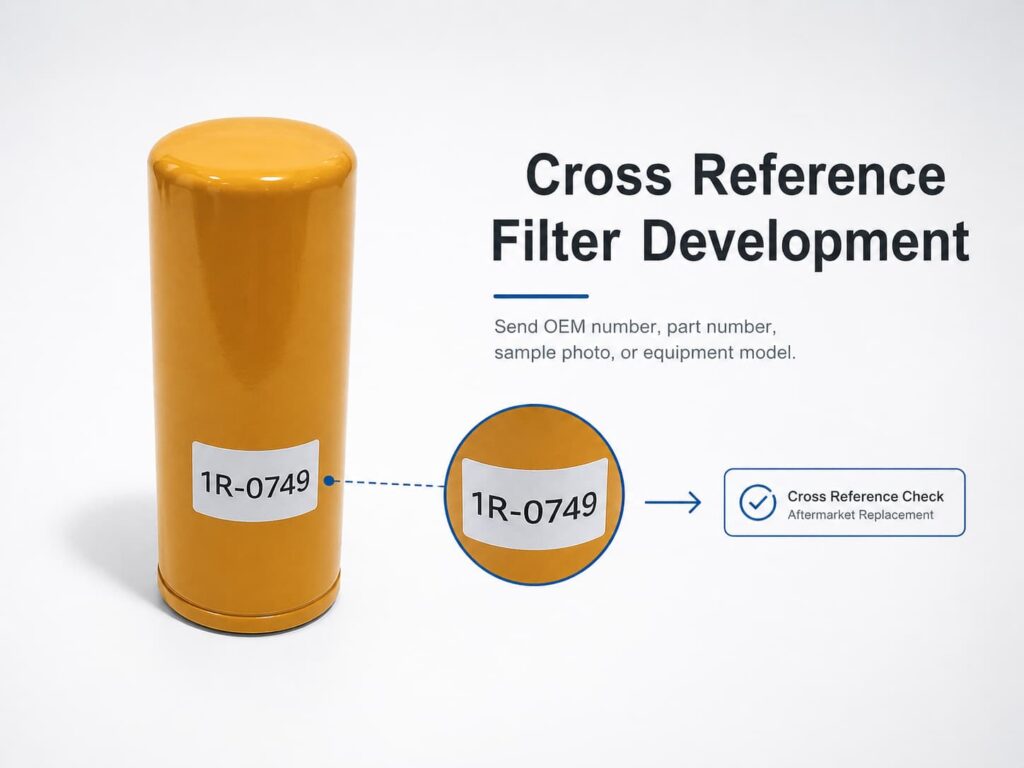
At LSX Filter, fitment can be checked based on OEM number, sample, drawing, or equipment model, which helps reduce mismatch risk in aftermarket supply.
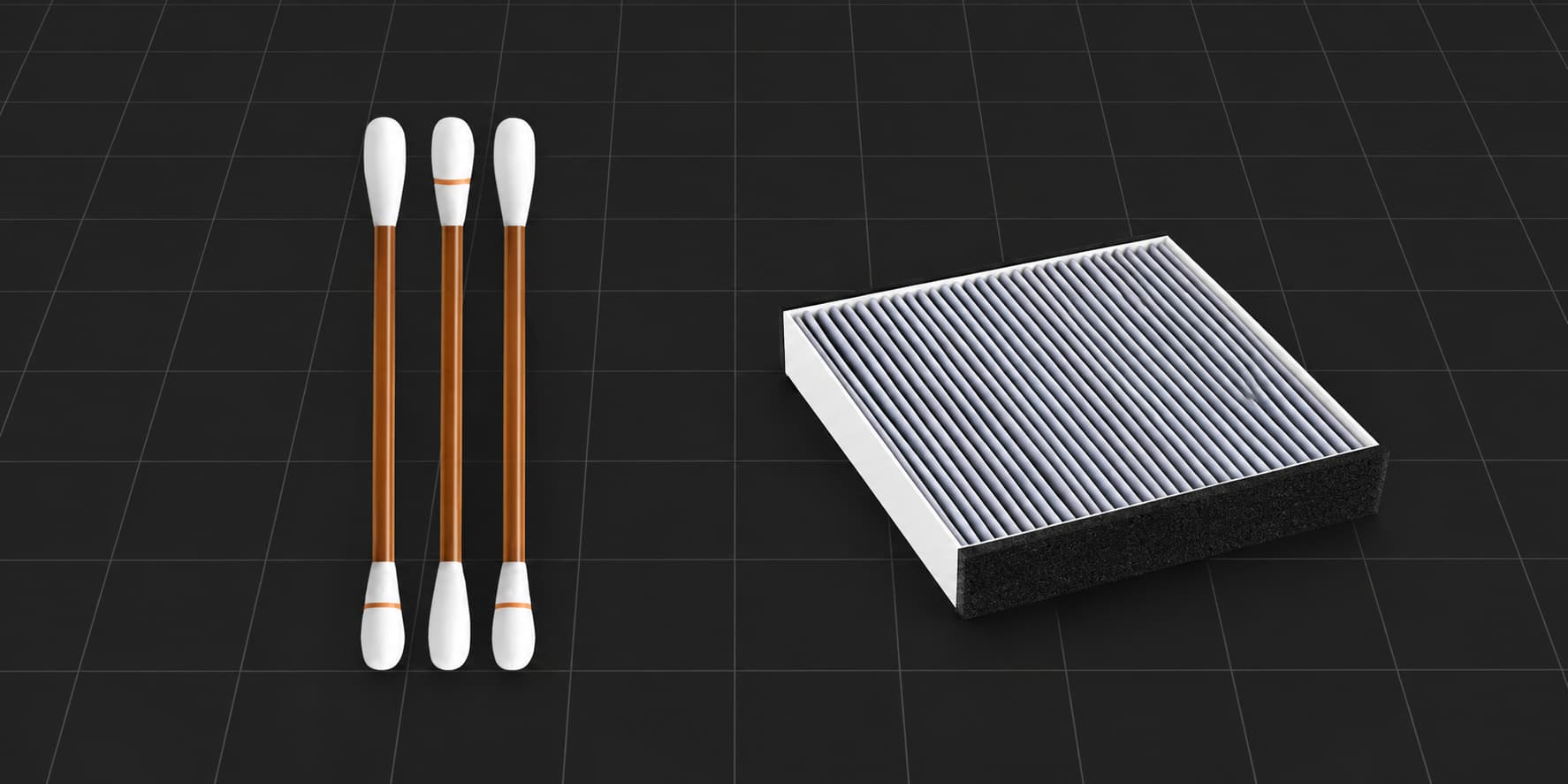
Simple Iodine Test for Starch-Based Filter Paper
A simple iodine swab test can be used as a basic observation method for low-grade filter paper.
If iodine is applied to the filter paper and the colour becomes noticeably darker, this may suggest the presence of starch-based additives. This can be a useful field check when comparing different low-cost filters.
However, this method should only be treated as a simple reference.
The iodine test can be used as a simple field check for starch-based additives, but it cannot replace professional filtration efficiency, airflow resistance, and dust holding capacity testing.
The final quality of an engine air filter still depends on factors such as:
- Filter media source
- Fiber stability
- Filtration efficiency
- Airflow resistance
- Structural strength
- Humidity resistance
- Production consistency in bulk orders
Can a Dirty Paper Engine Air Filter Be Cleaned with Compressed Air?
Many repair shops may say a dirty air filter can simply be blown clean and used again. For a paper engine air filter, this is not a recommended practice.
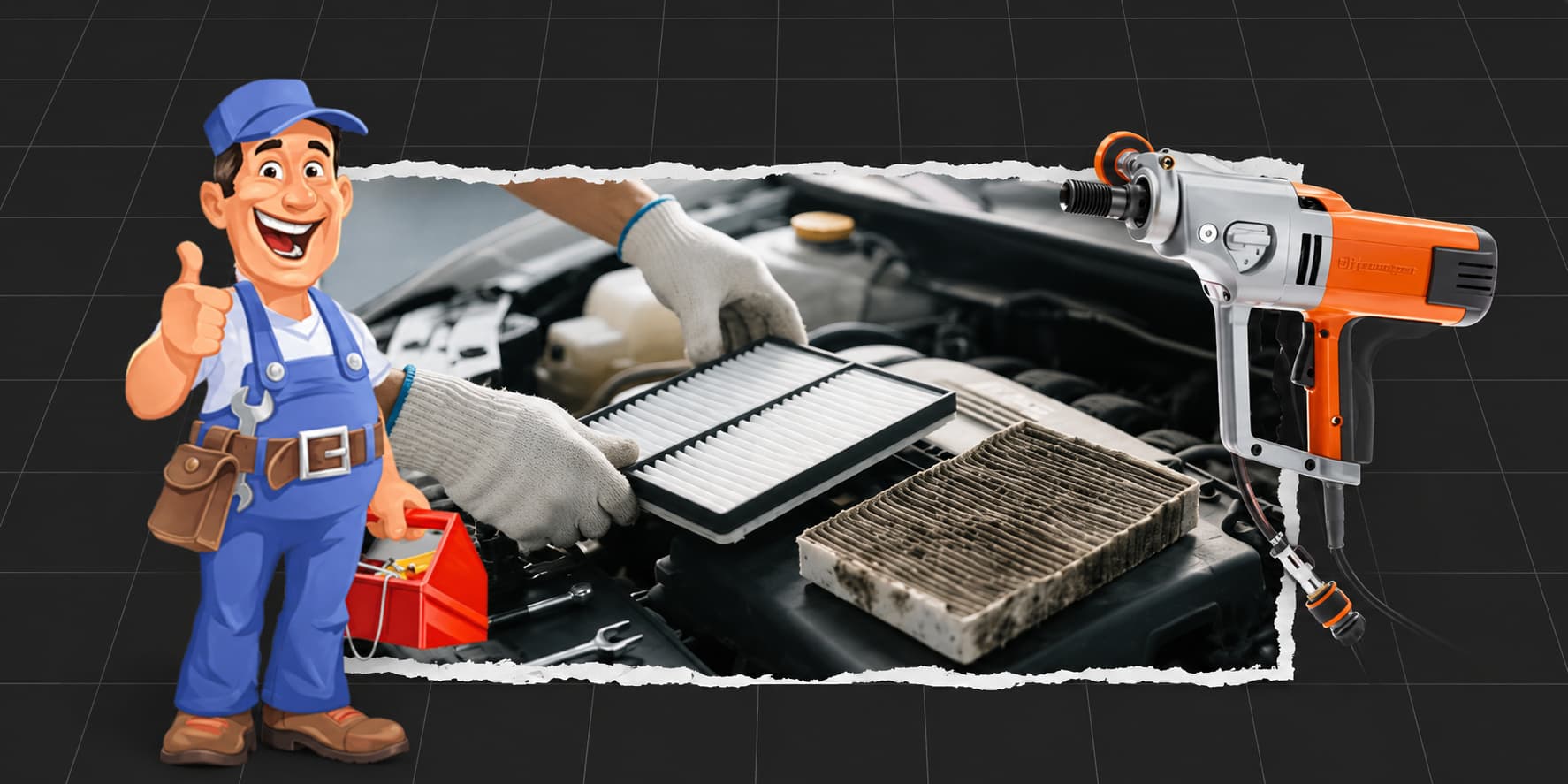
Why Blowing a Paper Air Filter with High-Pressure Air Is Not Recommended
High-pressure air may remove some loose dust from the surface, but it usually cannot remove the fine particles trapped deep inside the filter media.
For paper air filters, the main problem is not only incomplete cleaning. The stronger concern is that compressed air may damage the paper media itself. The filter may look cleaner on the outside, but the inner fibre structure may already be weakened.
This means blowing a paper air filter is not the same as restoring its original performance.
Compressed Air May Damage the Filter Media Structure
A paper engine air filter works because of its fine and stable fibre structure. This structure creates small filtration passages that help block dust while allowing air to pass through.
When high-pressure air is used, this microstructure may be damaged. As a result:
- The filter media may tear or weaken internally
- The pore structure may become less stable
- Filtration efficiency may drop
- Dust may pass through more easily
A blown paper filter may look cleaner, but the filtration structure may already be damaged.
This is why visual appearance alone is not enough to judge whether a used paper air filter is still reliable.
Paper Engine Air Filters Should Be Replaced, Not Reused After Heavy Dust Loading
If a paper engine air filter is heavily loaded with dust, replacement is the safer choice.
This is a practical recommendation not only for vehicle owners, but also for:
- Fleet operators
- Maintenance workshops
- Parts distributors
- Aftermarket service providers
Replacing the filter instead of repeatedly blowing it can help reduce performance risk and after-sales problems.
For paper engine air filters, replacement is safer than repeated compressed-air cleaning.
From a factory and supply perspective, a paper air filter is a wear part. Once the filter media becomes heavily clogged or structurally stressed, it should be replaced rather than reused.
Engine Air Filter Replacement Guide for Buyers and Repair Channels
For buyers, repair shops, and distributors, engine air filter replacement should not be based on mileage only. A more practical method is to combine driving conditions, filter appearance, airflow performance, and vehicle symptoms.
Recommended Replacement Logic for Different Driving Conditions
| Driving Condition | Suggested Action |
|---|---|
| Normal city driving | Inspect regularly and replace around the standard service interval. |
| Dusty or sandy roads | Inspect more often. Replacement may be needed around 5,000–8,000 km. |
| Long-distance commercial use | Build a mileage-based inspection schedule and check filters during regular maintenance. |
| Humid or rainy climate | Check for softening, deformation, odor, or media collapse. |
| Visible dirt or blocked pleats | Replace the filter instead of blowing it with compressed air. |
This logic is useful for repair channels and fleet operators because different vehicles may work in very different environments. A filter used on clean city roads and a filter used near construction sites should not follow the same replacement judgment.
When Engine Air Filter Replacement Should Not Be Delayed
Engine air filter replacement should not be delayed if the filter shows clear signs of damage or performance loss.
Replace the air filter when you find:
- Darkened or heavily dirty filter media
- Blocked pleats
- Deformed or collapsed filter paper
- Damp, soft, or sticky media
- Powder shedding or loose fibers
- Cracked or damaged frame
- Poor sealing edge
- Loose fit inside the air filter housing
The air filter should also be checked if the vehicle already shows symptoms such as weak acceleration, reduced engine power, or higher fuel consumption.
For importers, wholesalers, and repair channels, these points can be used as simple after-sales education. Clear replacement guidance helps customers understand why engine air filters should be replaced on time, especially in dusty, humid, or heavy-duty working conditions.
FAQ About Engine Air Filter Replacement
How often should a car engine air filter be replaced?
A car engine air filter is commonly checked or replaced around 10,000–15,000 km. If the vehicle often runs on dusty roads, sandy areas, construction sites, or other harsh environments, inspection or replacement may be needed around 5,000–8,000 km. The final decision should follow the vehicle manual and the actual filter condition.
Can an engine air filter last 20,000 km?
In cleaner city driving conditions with good air quality and paved roads, some engine air filters may last close to or beyond 20,000 km. However, mileage alone is not enough. The filter media, pleat condition, sealing edge, and dust loading should still be checked regularly.
What are the signs of a clogged engine air filter?
Common signs include sluggish acceleration, reduced engine power, higher fuel consumption, weak intake airflow, and visibly dark or blocked filter media. Some of these symptoms may also come from other engine system problems, so the air filter should be checked together with other maintenance items.
Is a cheap engine air filter bad for the engine?
Not every low-cost engine air filter is bad, but extremely cheap filters may have risks in filter media stability, sealing quality, humidity resistance, and production consistency. For importers, wholesalers, and repair channels, stable quality is often more important than only choosing the lowest price.
How can buyers identify a quality engine air filter?
Buyers can check the filter media surface, pleat spacing, sealing edge, frame strength, and fitment accuracy. A quality engine air filter should have uniform media, neat pleats, stable structure, and accurate dimensions. The iodine swab test can be used as a simple reference for starch-based additives, but it cannot replace professional filtration efficiency, airflow resistance, and dust holding capacity testing.
Can a paper engine air filter be cleaned with compressed air?
It is not recommended. High-pressure air may remove some surface dust, but it usually cannot remove fine particles trapped deep inside the paper media. Compressed air may also damage the fiber structure and reduce filtration efficiency. For dirty paper engine air filters, replacement is safer than repeated compressed-air cleaning.
What is the difference between paper media and synthetic media air filters?
Paper media is widely used and usually more cost-effective. Synthetic media or composite media may offer better humidity resistance, fiber uniformity, and service life in certain working conditions. The best choice depends on the vehicle type, operating environment, target cost, and required filtration performance.
Does LSX Filter supply aftermarket engine air filters for bulk orders?
Yes. LSX Filter supports aftermarket replacement engine air filters, sample checking, OEM number matching, private label support, and bulk supply for importers, wholesalers, distributors, and repair channels.